
Why congestion control

Congestion control is resource management: assigning limited resources of link rate to flows
TCP and flow control

TCP: flow-controlled bidirectional byte stream
The speed is regulated by link_rate at the beginning. The steady state is limited by min(link_rate, how fast the reader is draining the byte stream (window_size)).
Single-flow, single-hop model

S(ender) —--------- X(router) —---------- R(receiver) with r = 1 Gbit/s and propagation delay = 1 second
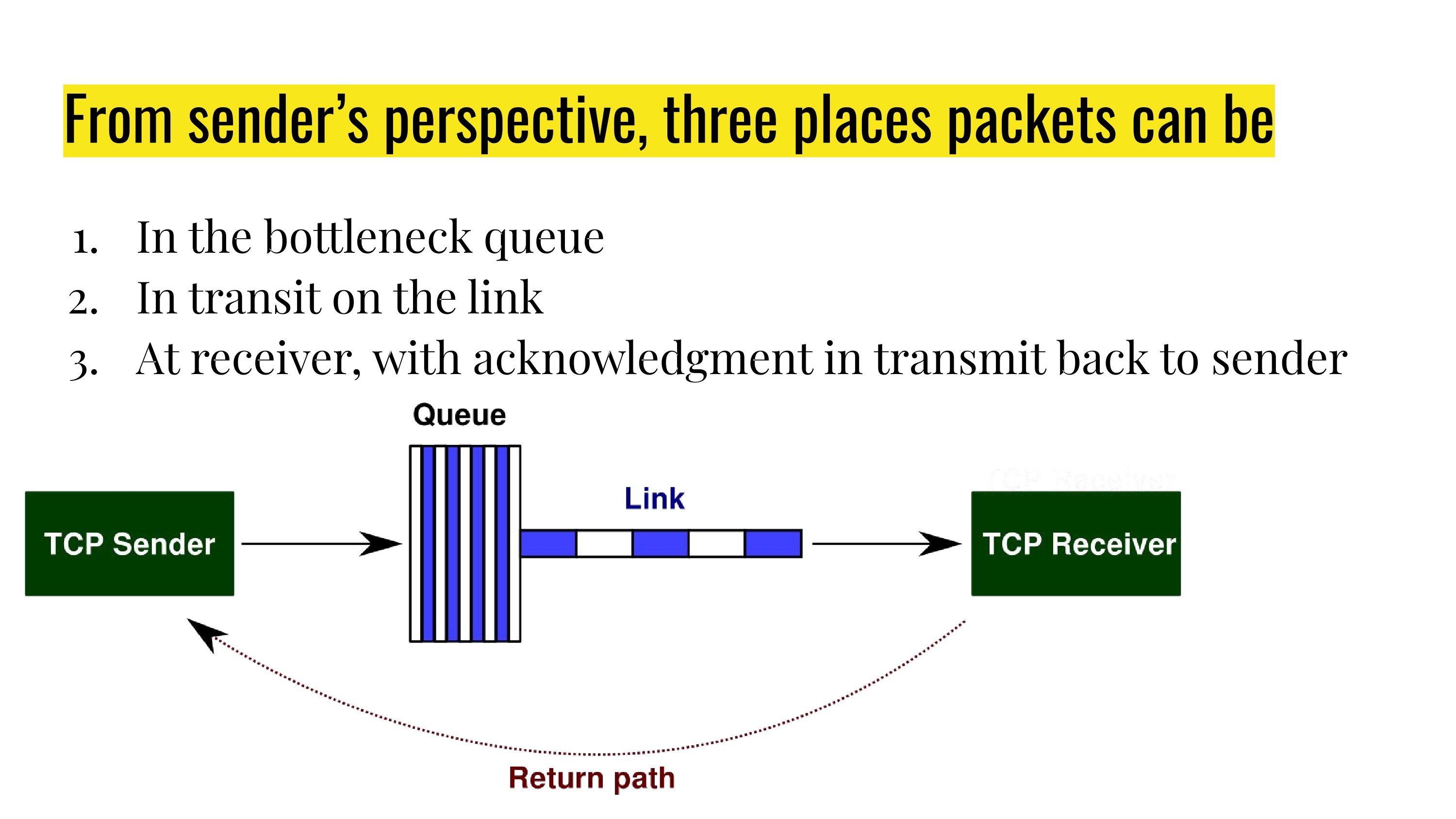
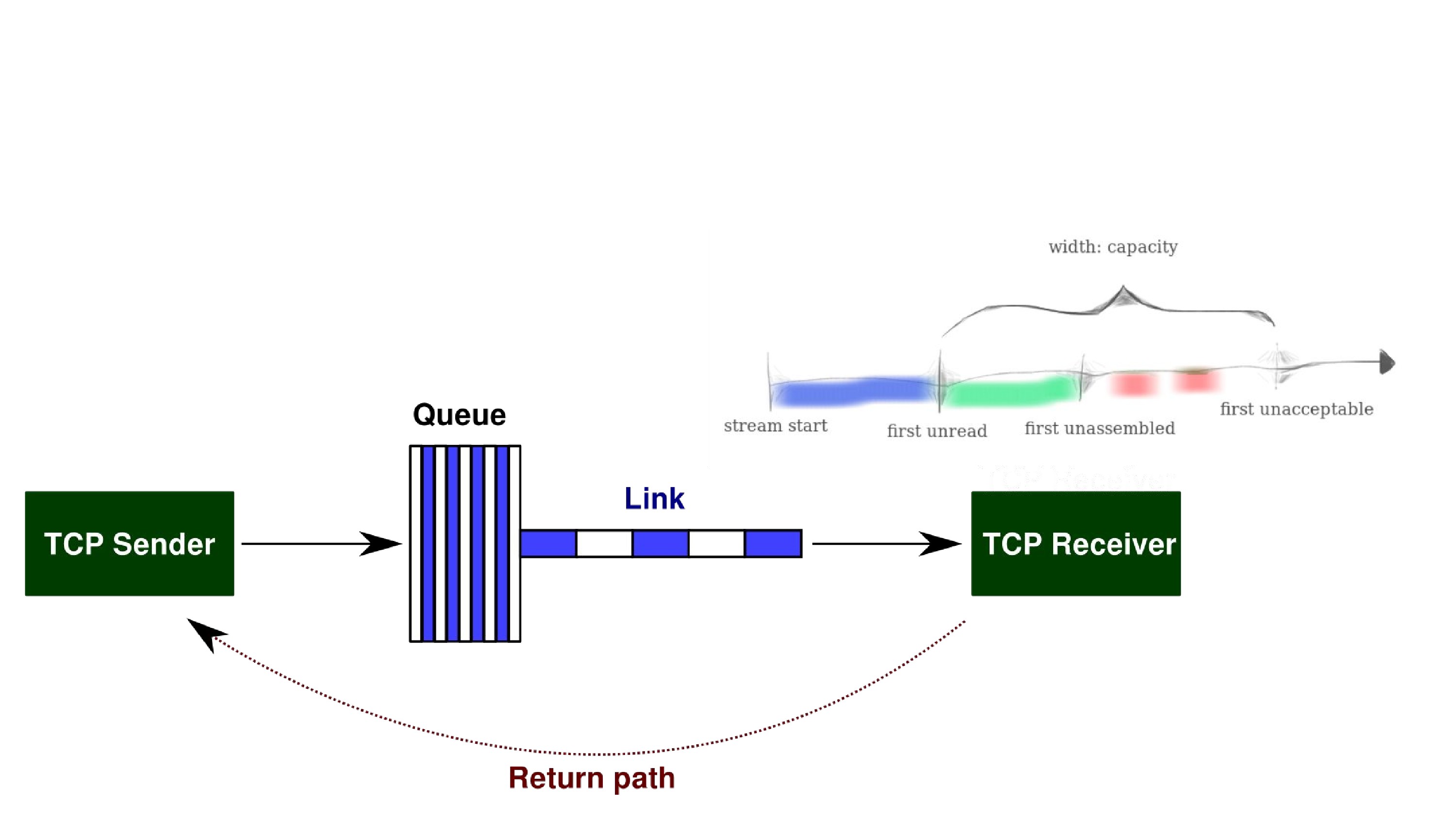
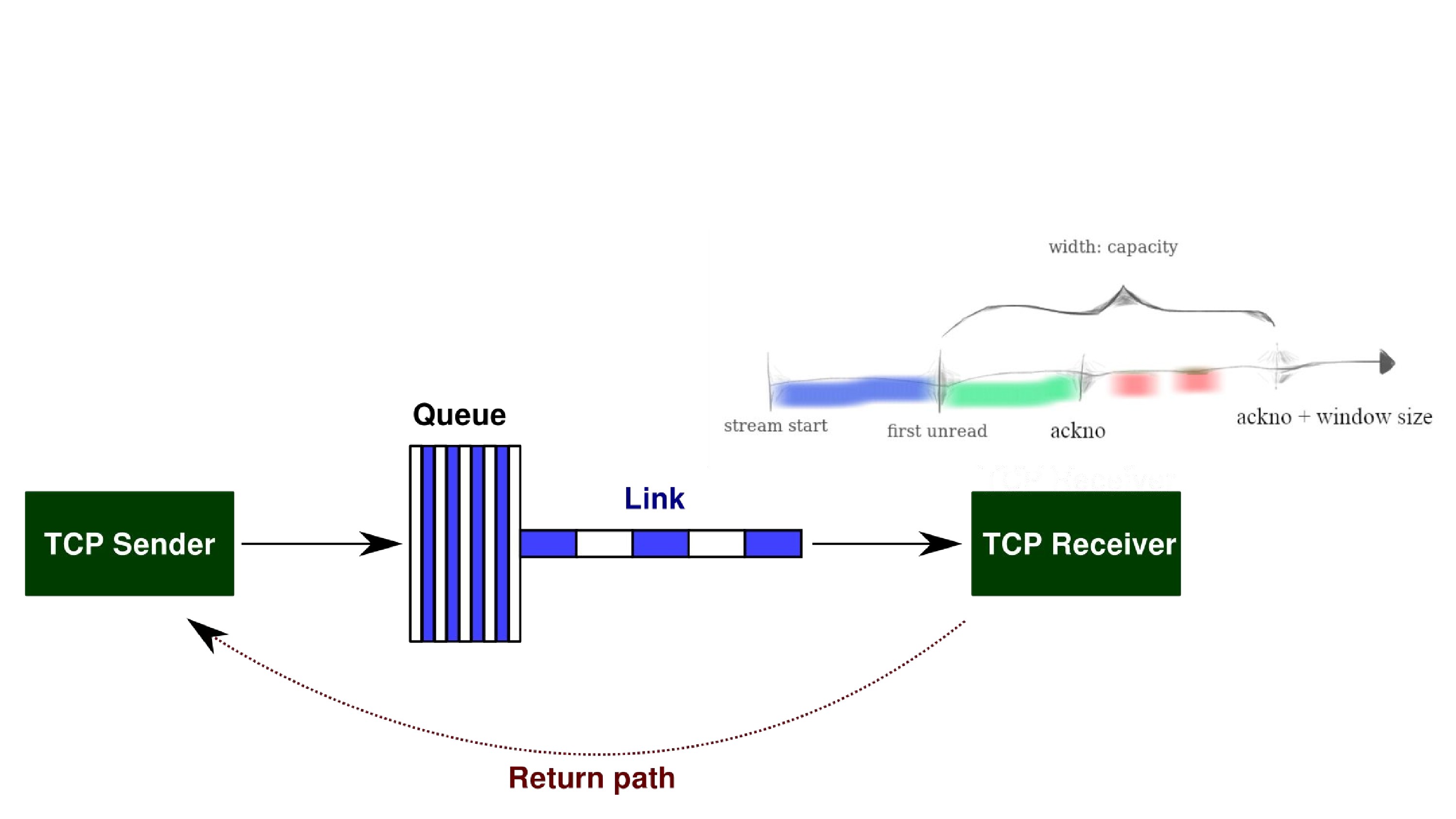
The sender sends a datagram, still waiting for the corresponding ackno, where could the datagram be (in the sender’s mind):
- Propagating on the link
- Waiting at the router queue (bottleneck queue)
- Could have been received by the receiver, but ackno still on the way back
- Or the datagram or the ackno is lost/dropped
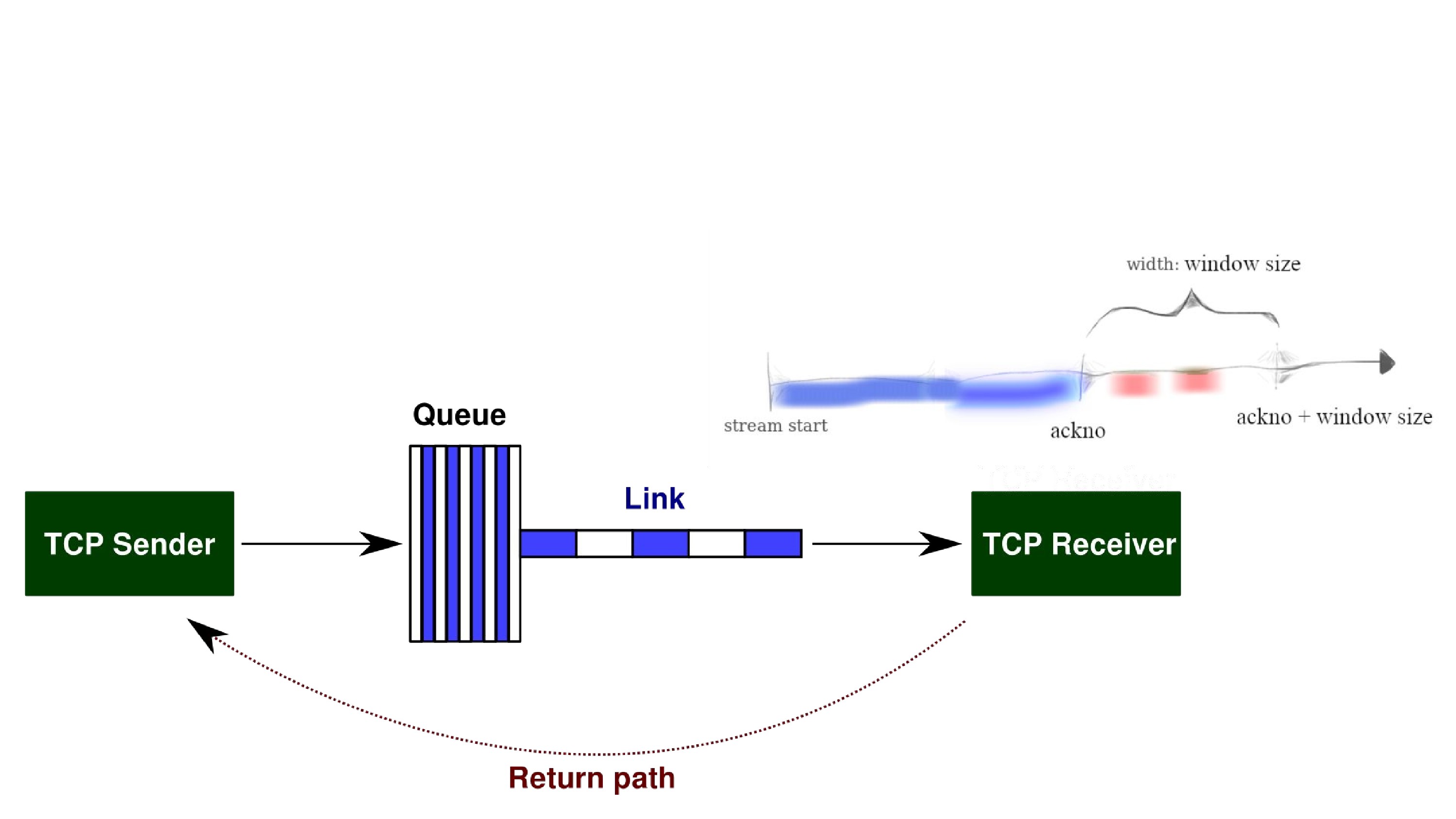
Outstanding segments from the sender’s perspective: [ackno, ackno + window_size)
Window_size: cap on the number of “outstanding” bytes
- “Outstanding” means sent, not acked or judged lost
Q: what if the window size is really small?
A: throughput [公式] (if propagation delay = 1s) (RTT = 2*propogation delay)
Q: what if the window size is gigantic?
A: maximum throughput: 1 Gbit/s and the router may run out of memory or huge queueing delay. We call this congestion.
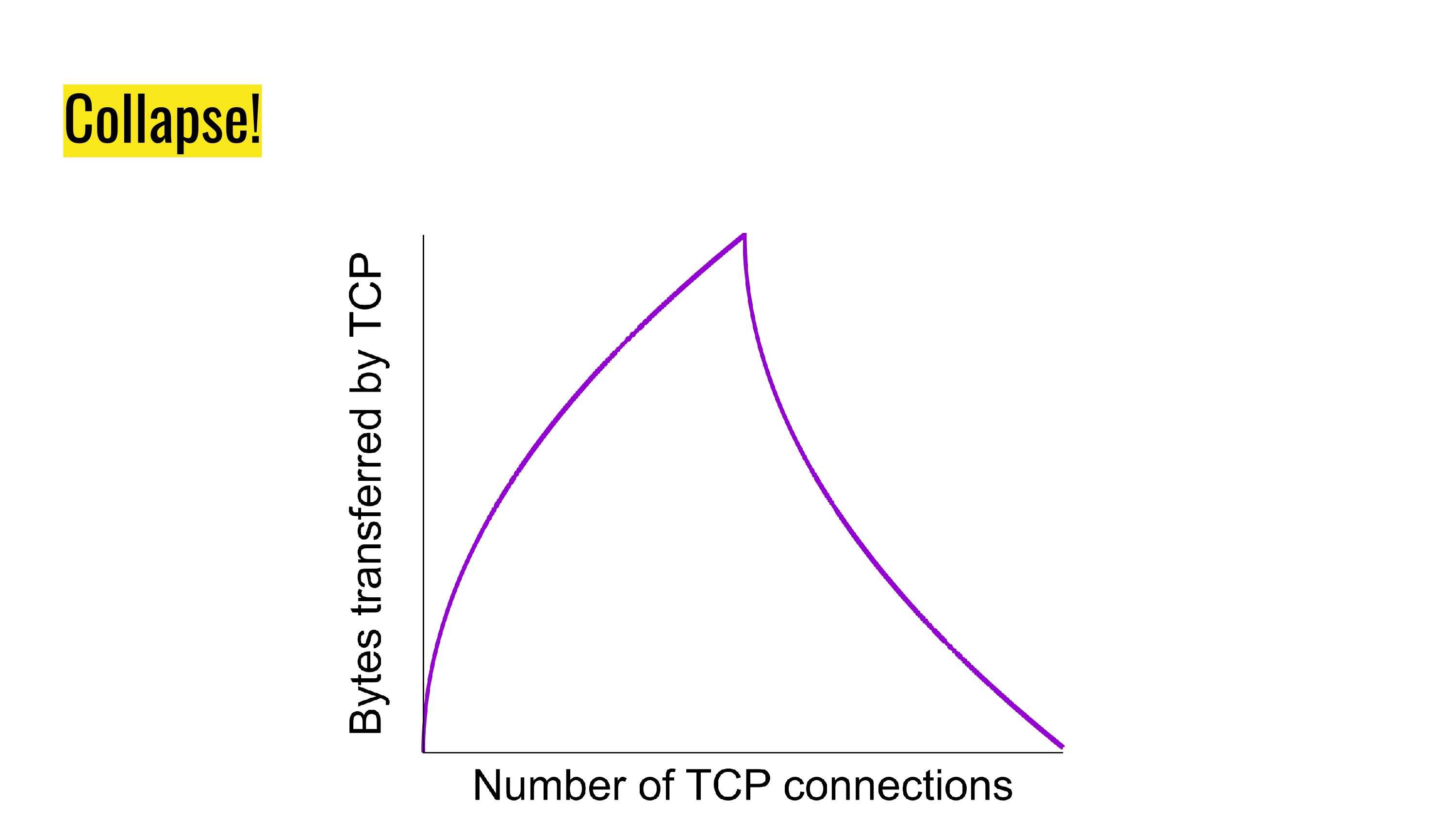
Congestion is bad
Congestion collapse (in the 1980s): receivers were advertising large window_size and forced the router to drop lots of packet
Or some flows send too much, others are starved. There is an issue for fairness.
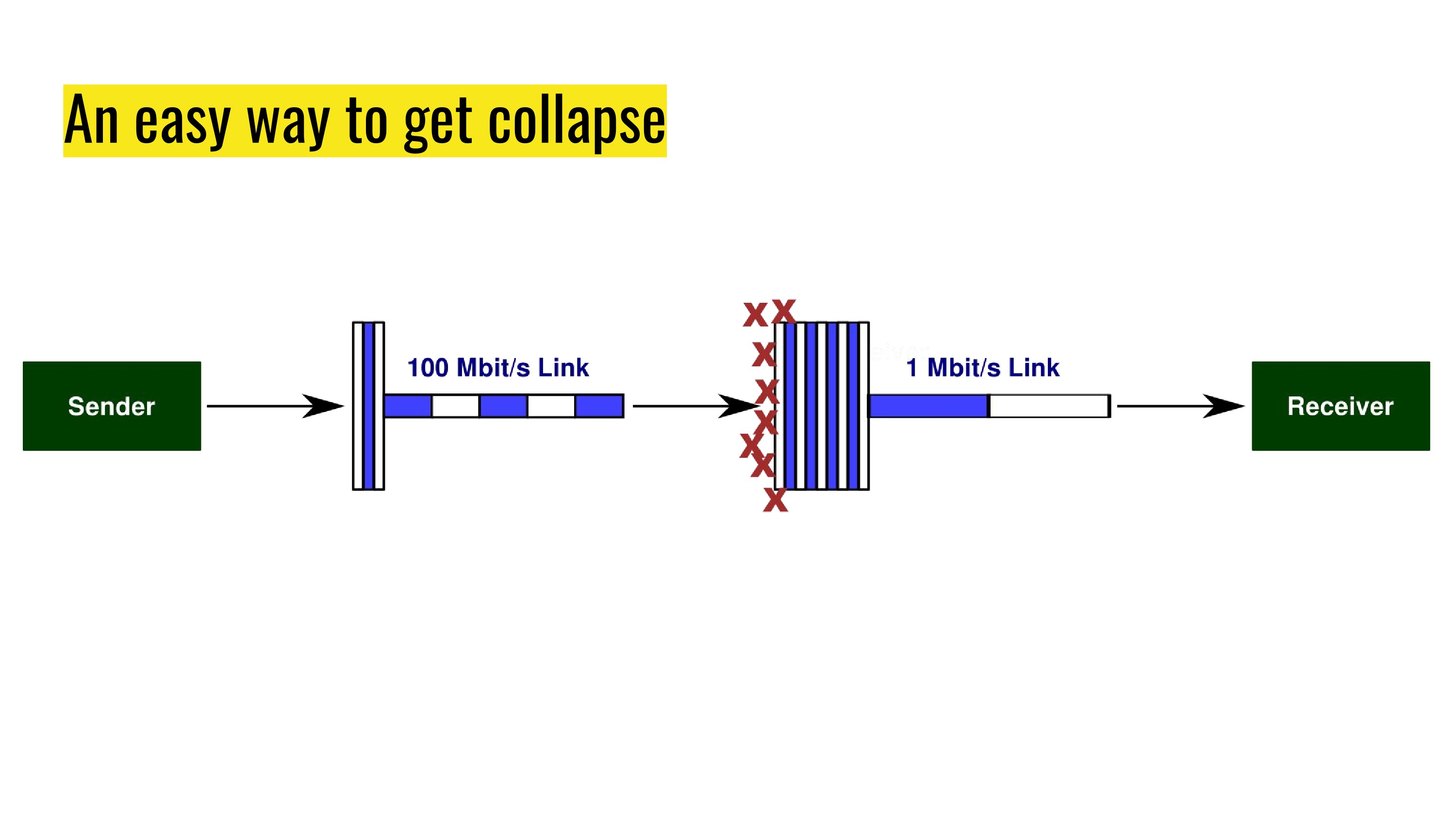
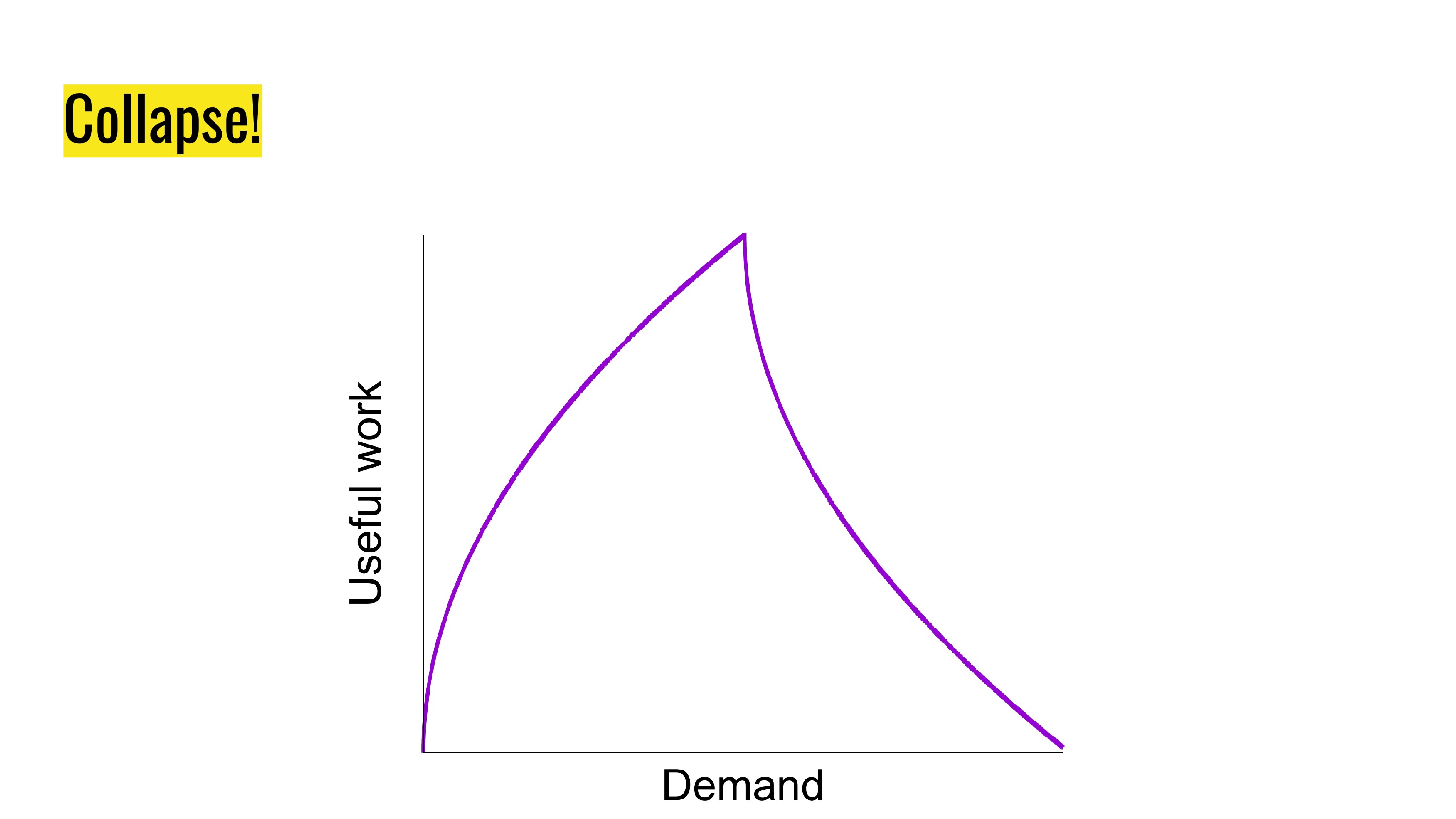
Useful work should increase as demand increases. It’s okay if the derivative is less than 1, but it should not be the case that the derivative is negative.
Single-flow, single-hop model would not have a collapse, since the throughput stays at 1 Gbit/s even if many packets are dropped
The “collapse” issue:
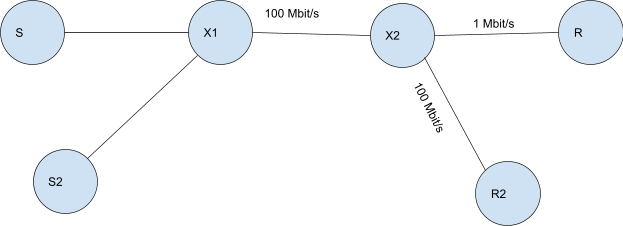
- If there is only 1 flow: S2 → R2, throughput would be 100 Mbit/s
- If there is two flows: S → R and S2 → R2, throughput would be ~51 Mbit/s if S sends at 100 Mbit/s (COLLAPSE) (这种情况大约两秒发送101Mbits)
- If there is two flows: S → R and S2 → R2, S sends at 1 Mbit/s and S2 sends at 99 Mbit/s. Throughput would be 100 Mbit/s
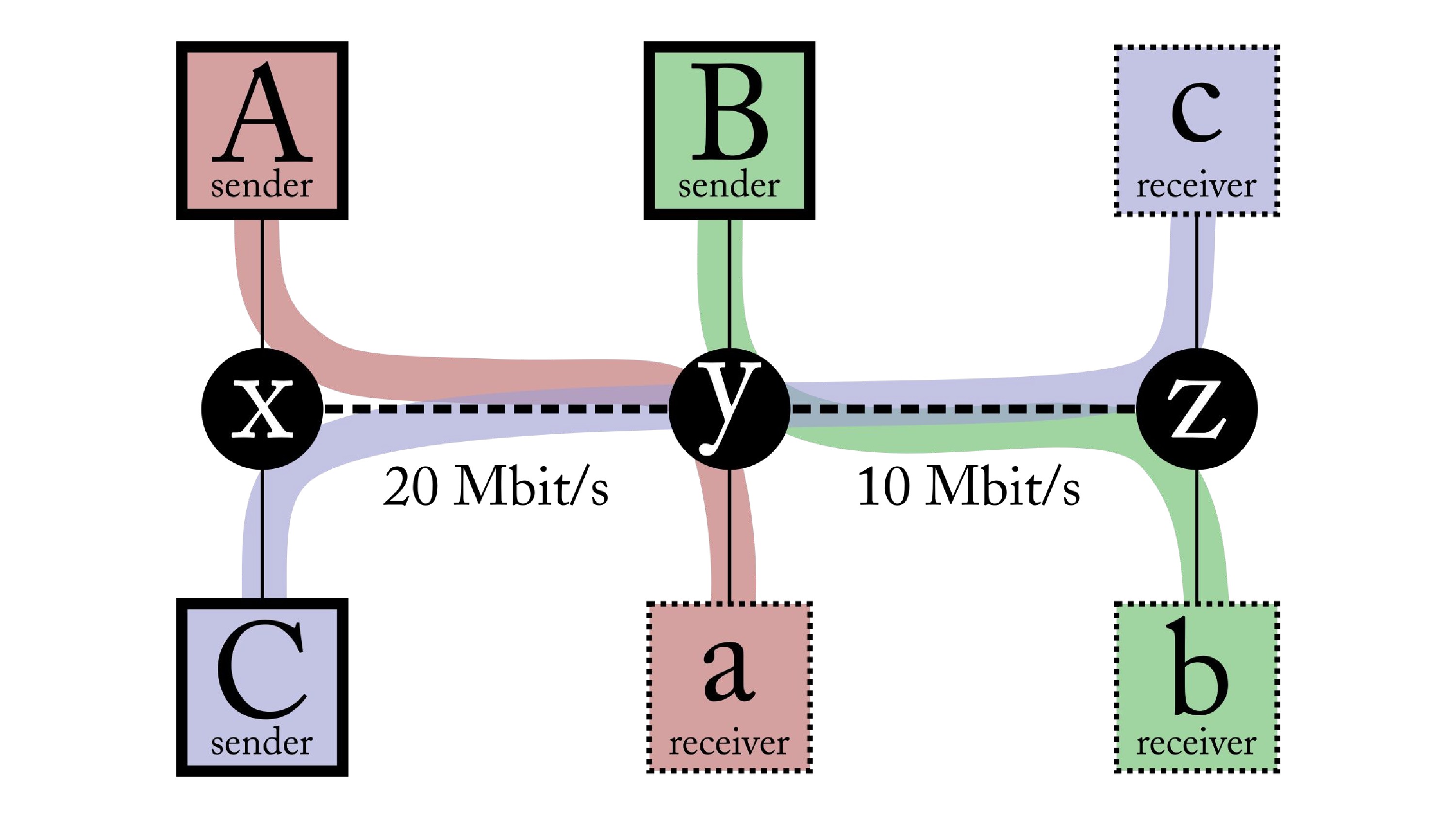
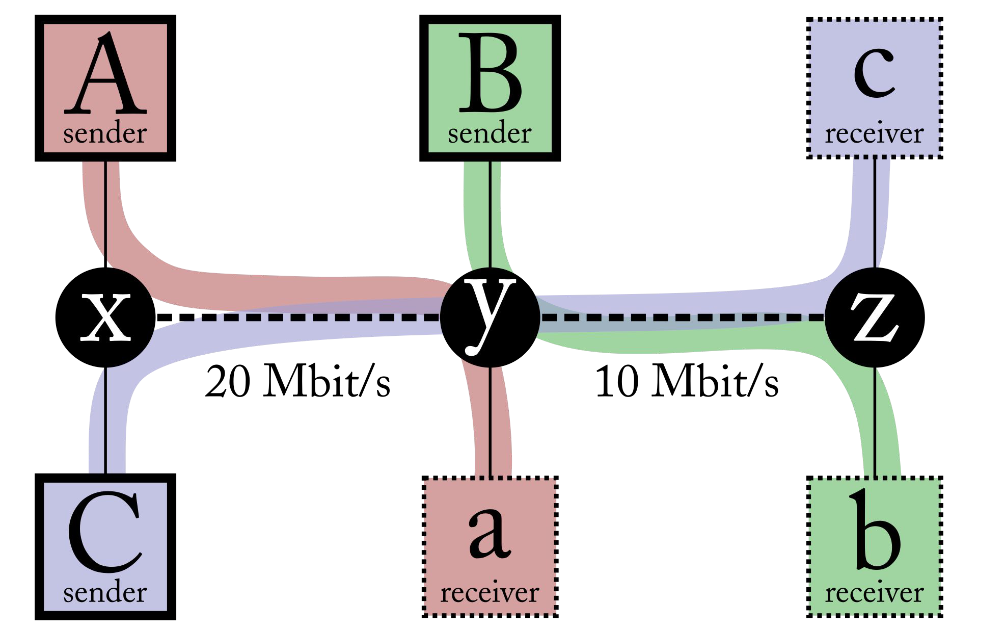
The “fairness” issue:
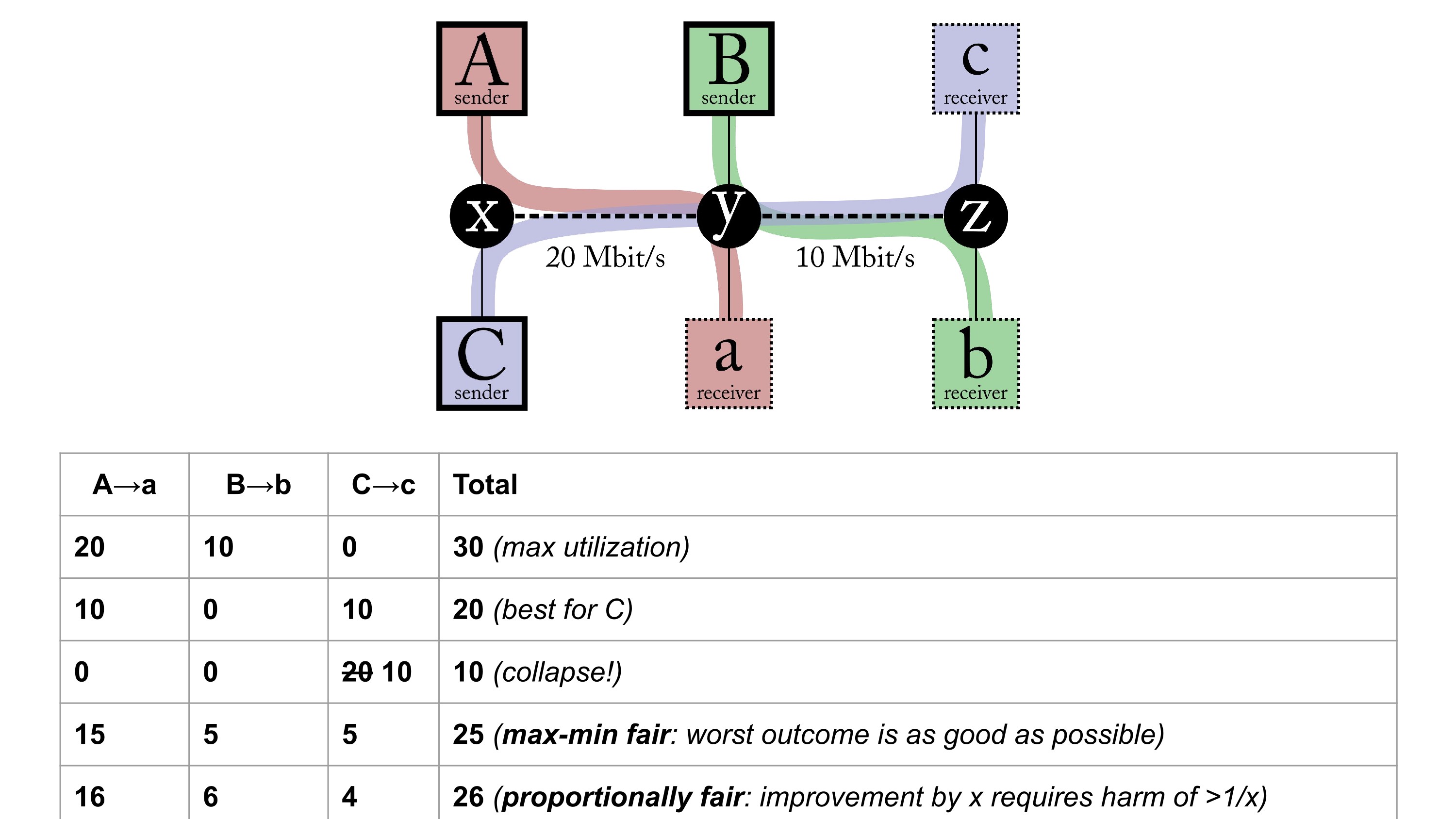
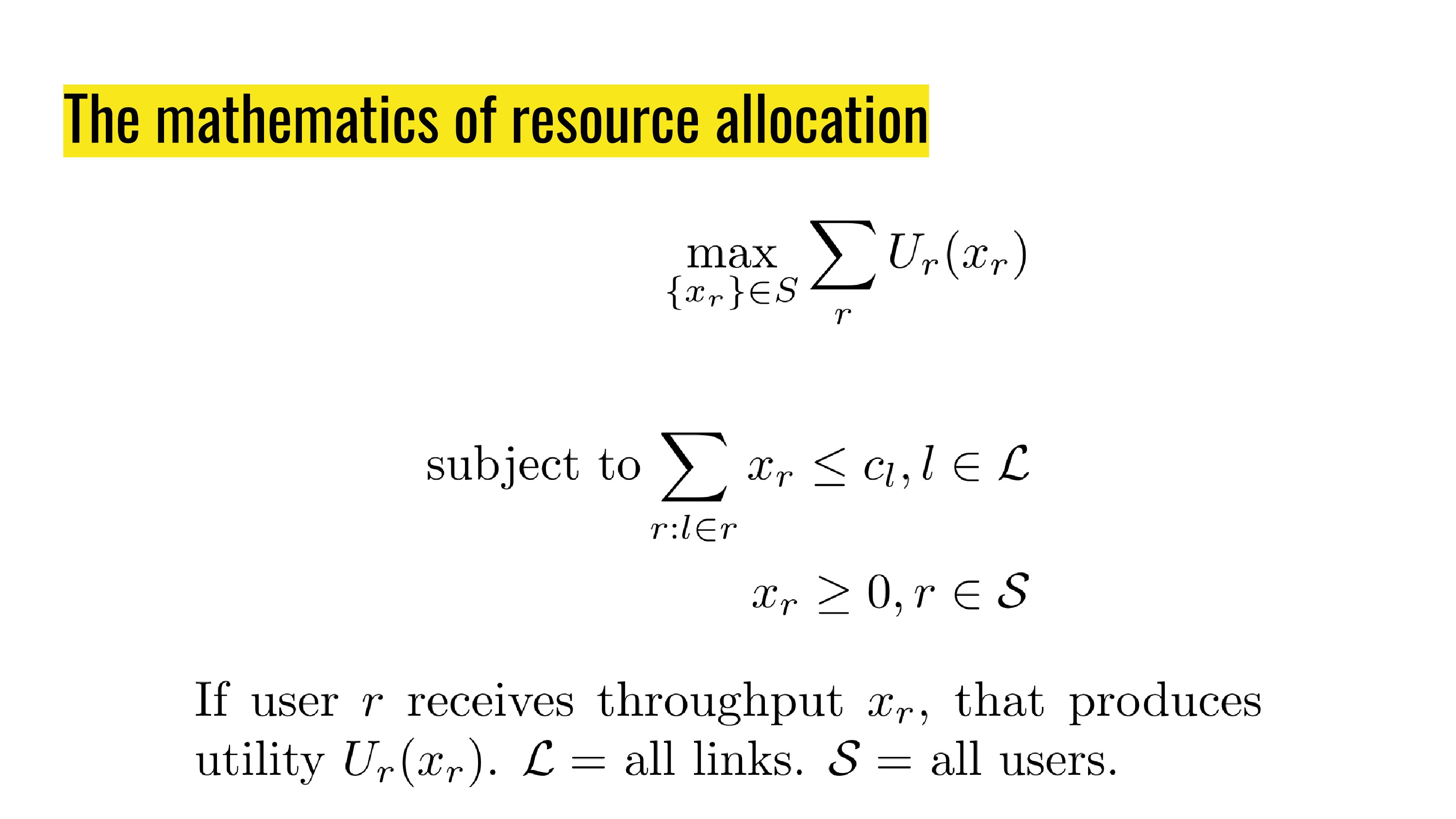
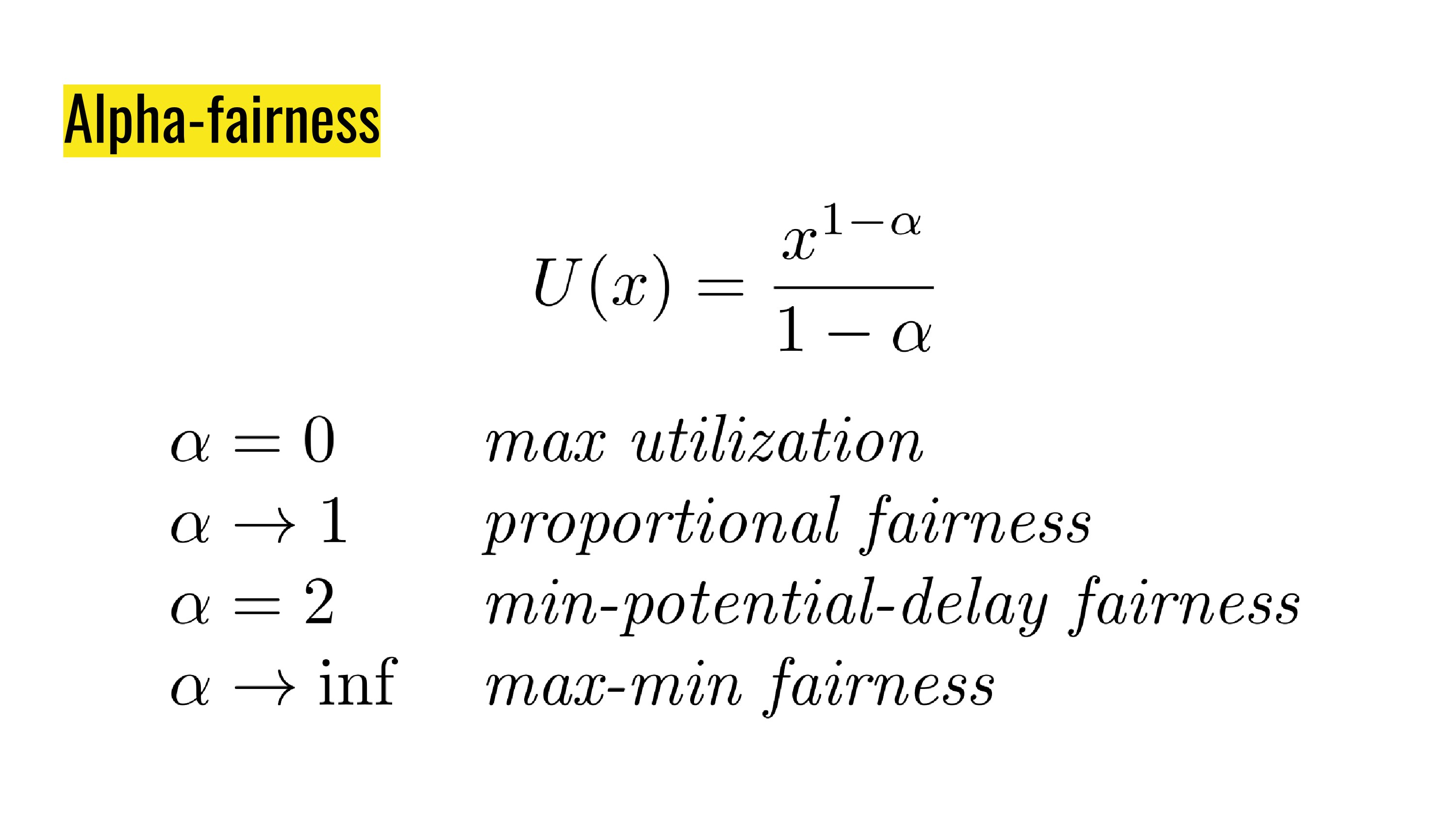
The objective: maximizing a utility function: [公式] and [公式]
- [公式] , max utilization
- [公式] , proportional fairness
- [公式] , min-potential-delay fairness
- [公式], max-min fairness
Other objectivesL
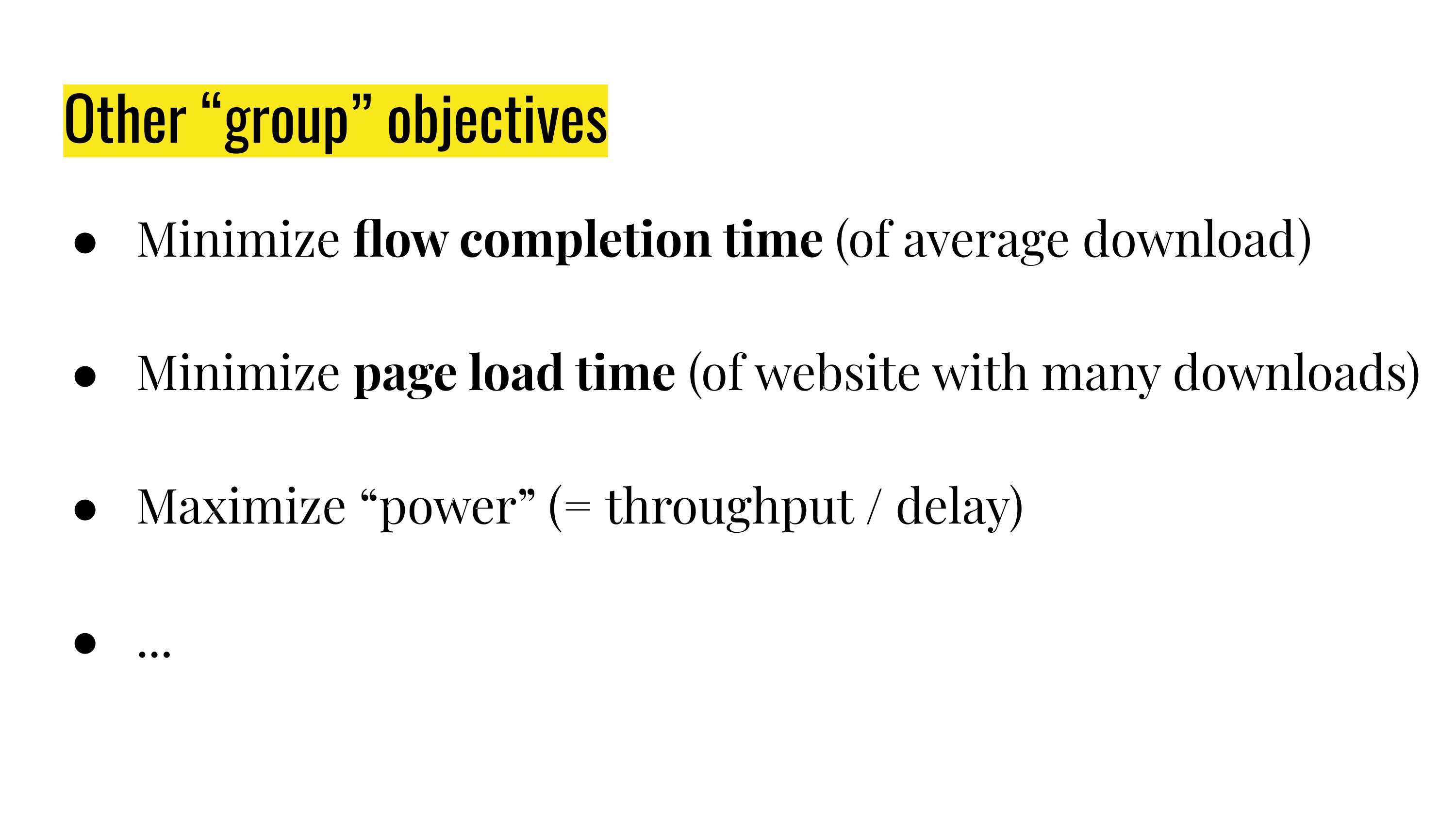
- Minimize flow completion time (of average download)
- Minimize page load time (with many download flows)
- Maximize “power” (= throughput / delay)
Algorithms to prevent collapse are called “congestion control”
- What is the right window size?
- How should flows learn the window size?