Routing Basics
Route algorithm
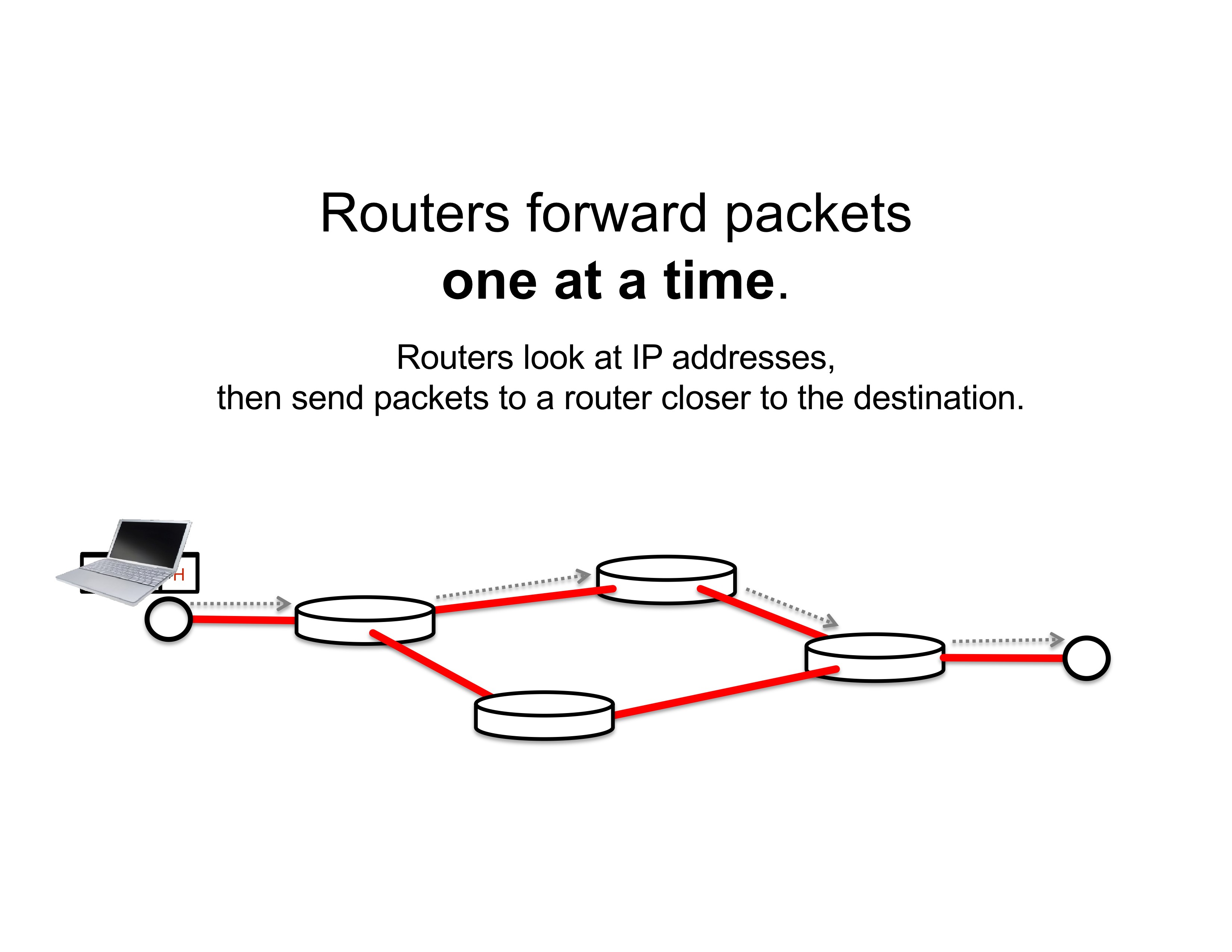
Routers forward a packet for one hop by looking at the IP address。
How to send the packet without knowing anything about the topology?
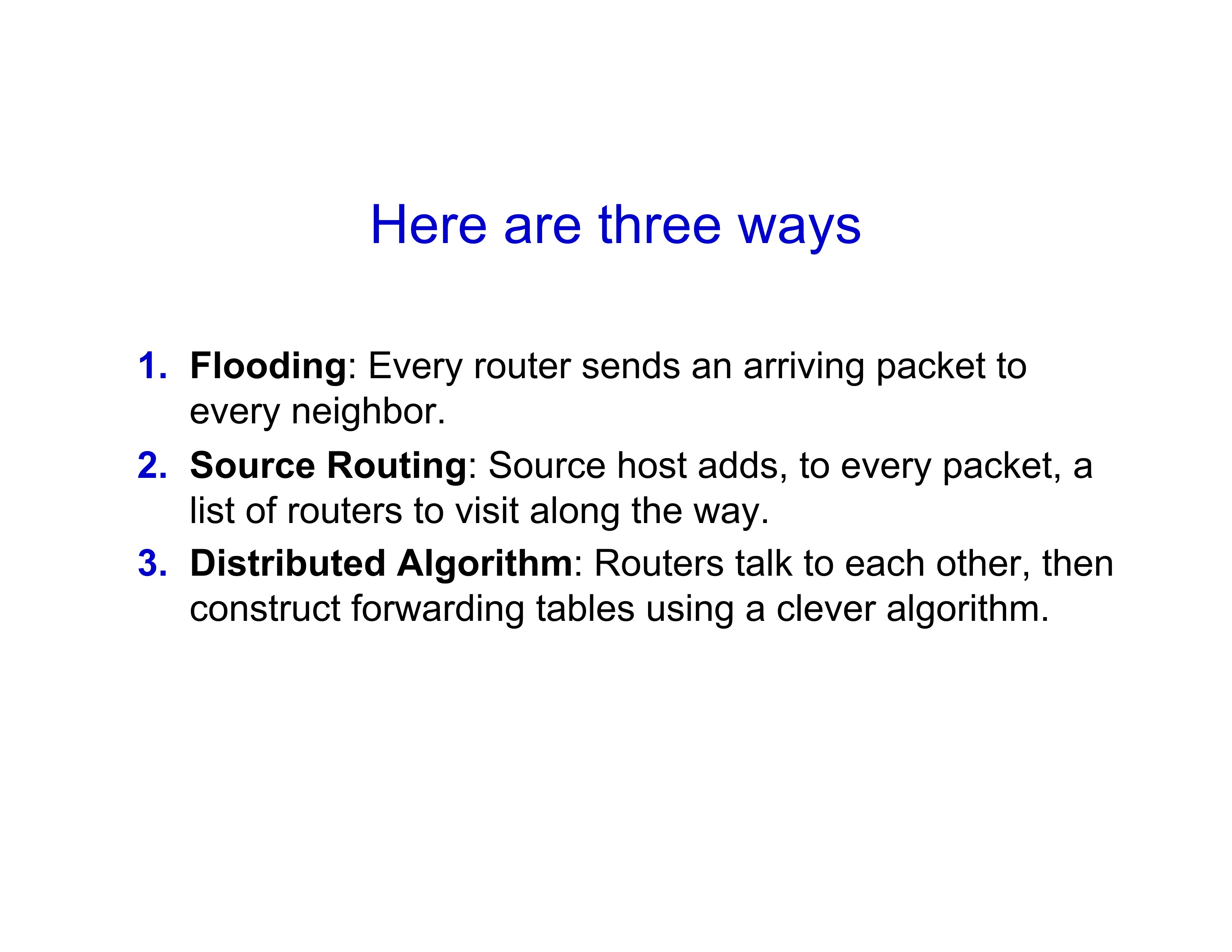
- Send it to a random next hop.
- Flooding: send it to everybody.
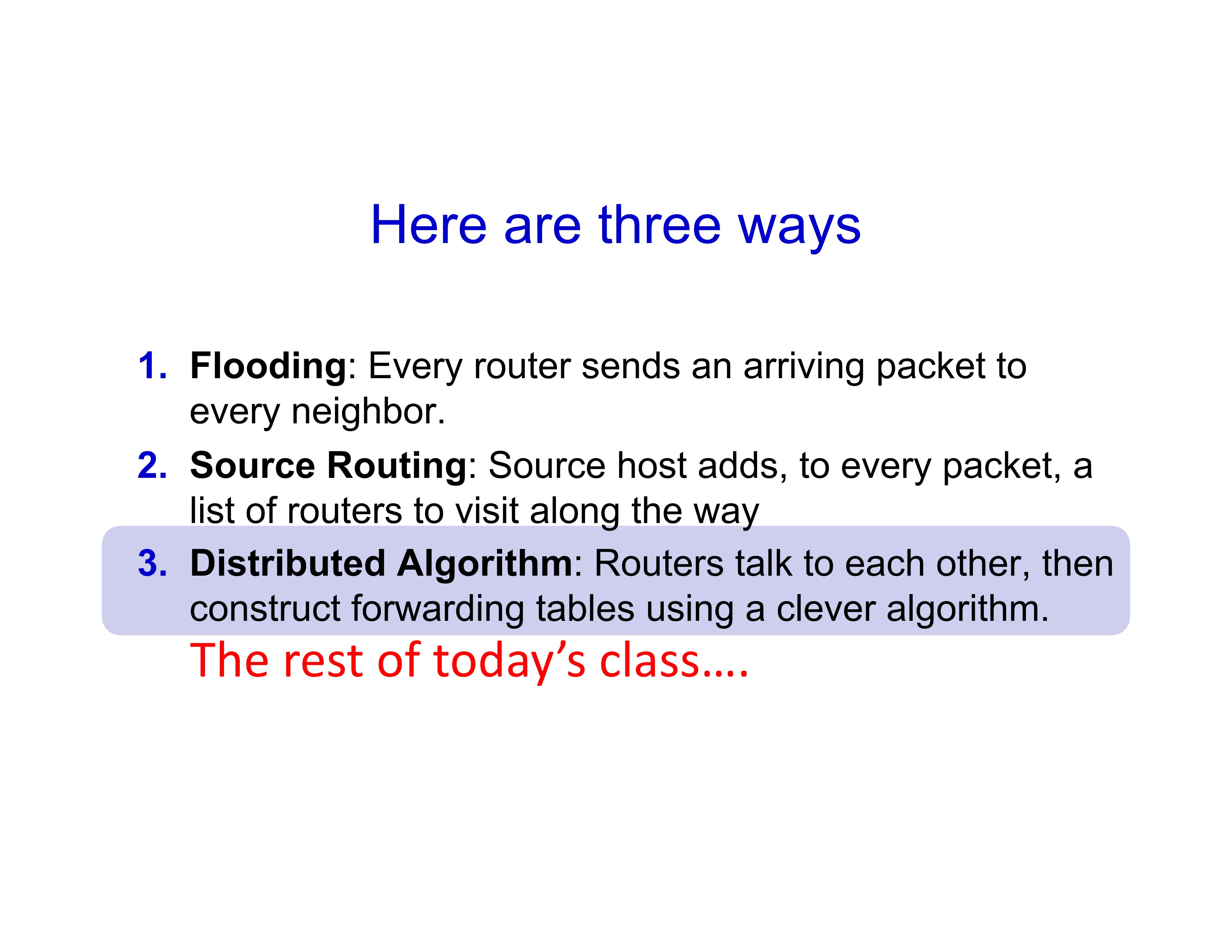
- Source Routing: the original sender list all routers along the path
- Distributed algorithm: routers construct a forwarding table by talking with each other
Flooding
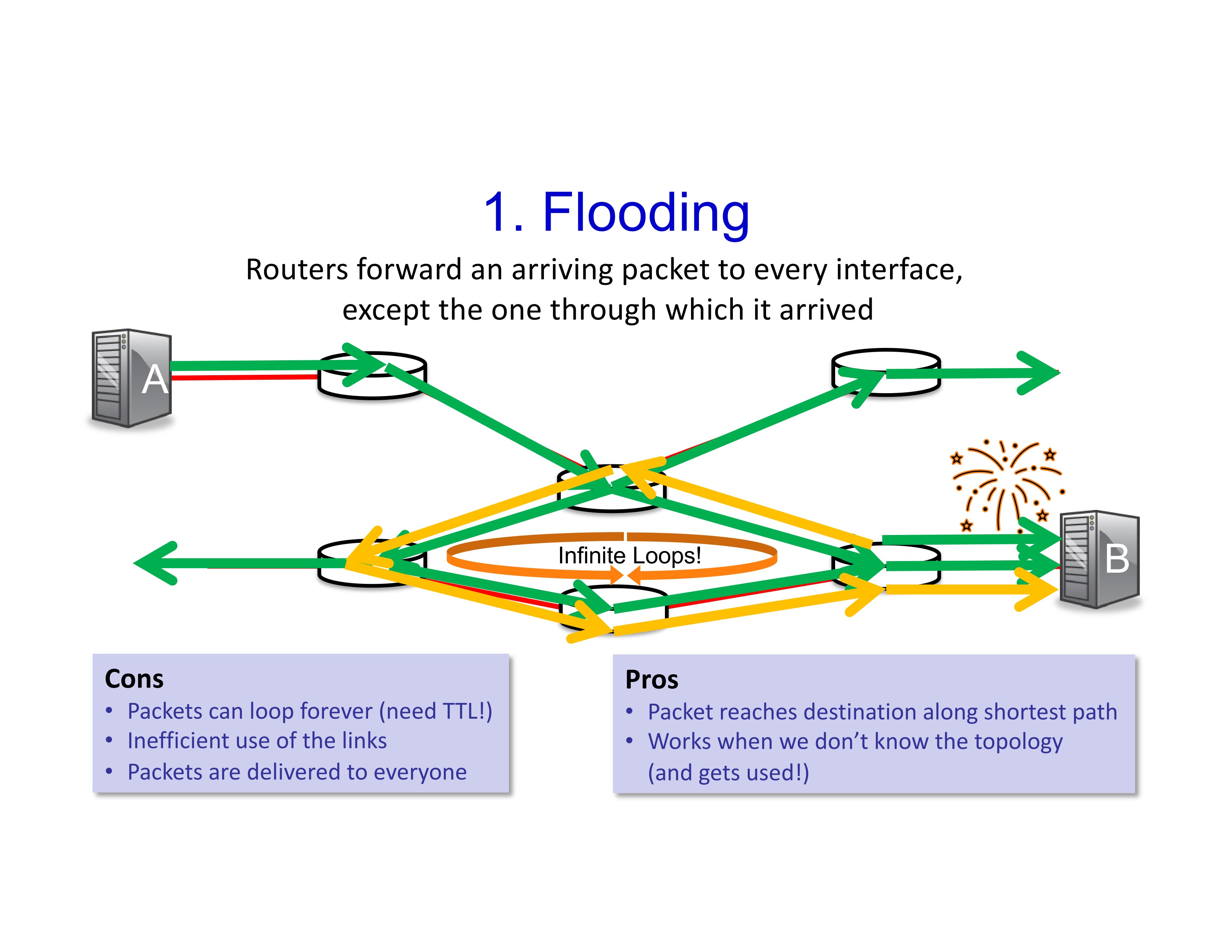
Flooding: routers forward a packet to every interface, except for the one it comes from
Cons:
- infinite loops. TTL field was originally designed to avoid the infinite loops.
- Inefficient usage of links: a packet would use all links at least once
- Packets are delivered to everyone
Pros: packets arrive the destination at the shortest possible path
Source Routing
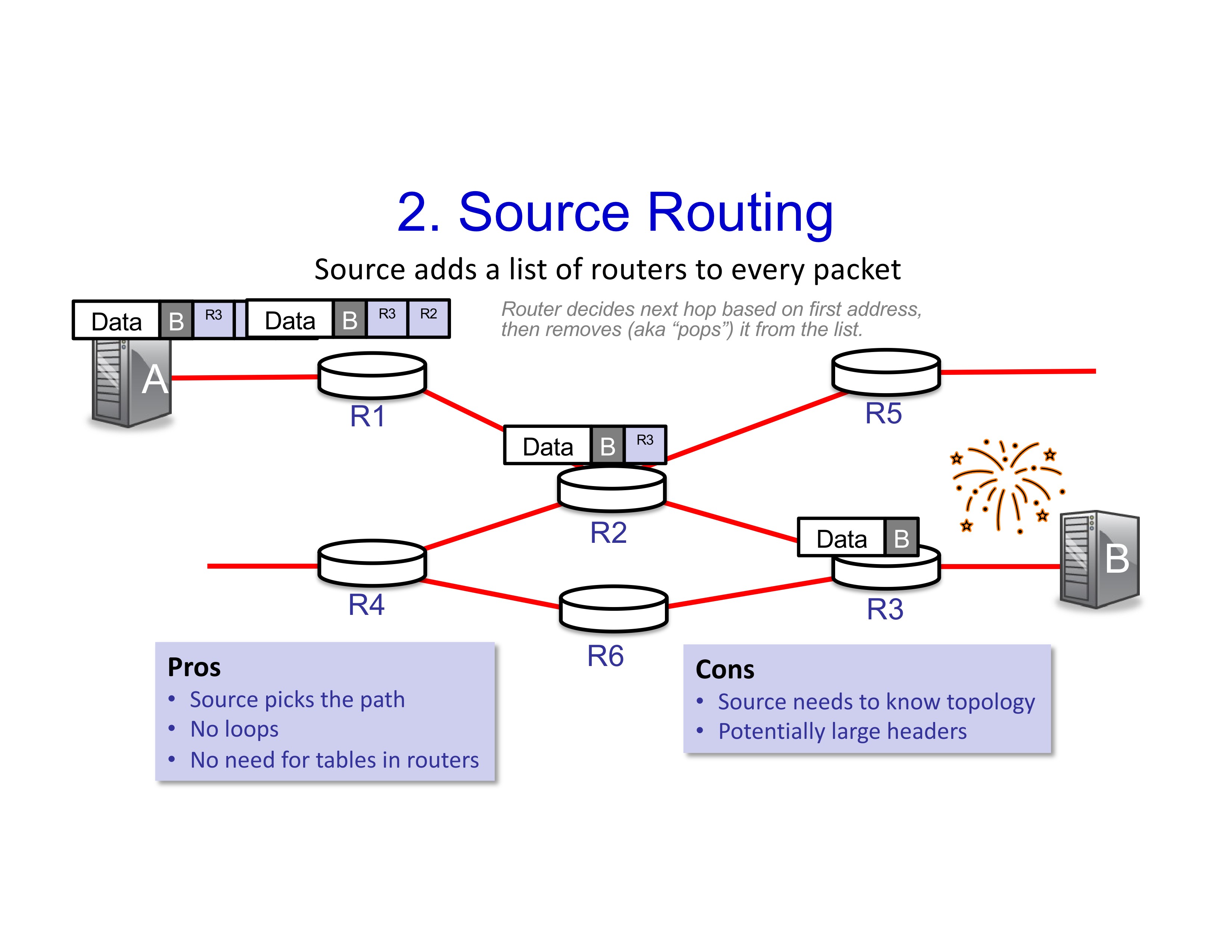
Source Routing: the source hosts specify the whole path (A -> R1 -> R2 -> R3 -> B) or part of the path (the path has to go through R2)
Cons:
- Revealing the underlying network topology causes potential vulnerabilities, and ISPs do not want to reveal that to users (due to security/competition)
- Potentially large headers and all sources need to know the networking topology to do this
Pros:
- No loops
- No need for tables at routers
Routing tables
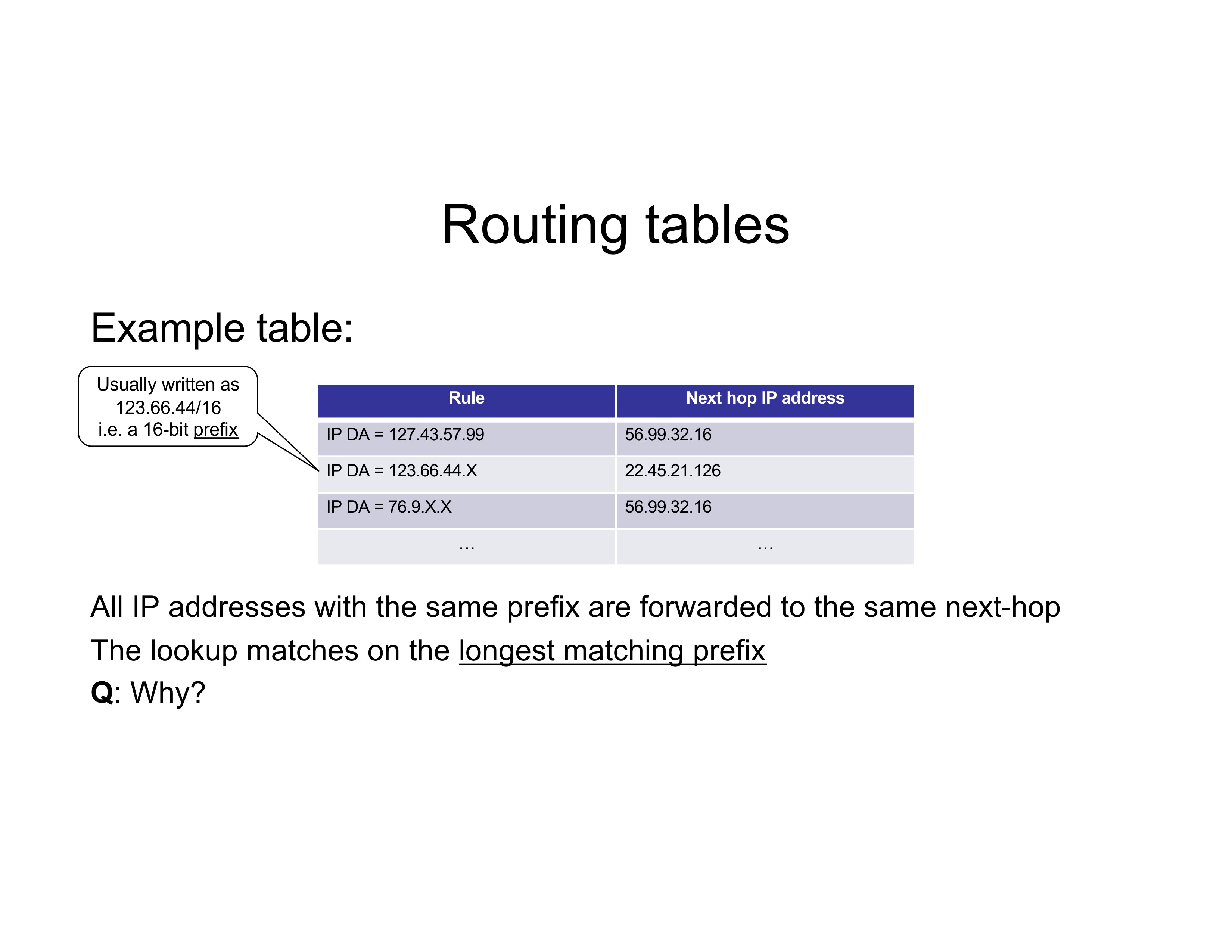
Routing tables: map prefix of IP destination addresses to next hop IP address
- X.Y/Z is a Z-bit prefix IP destination address
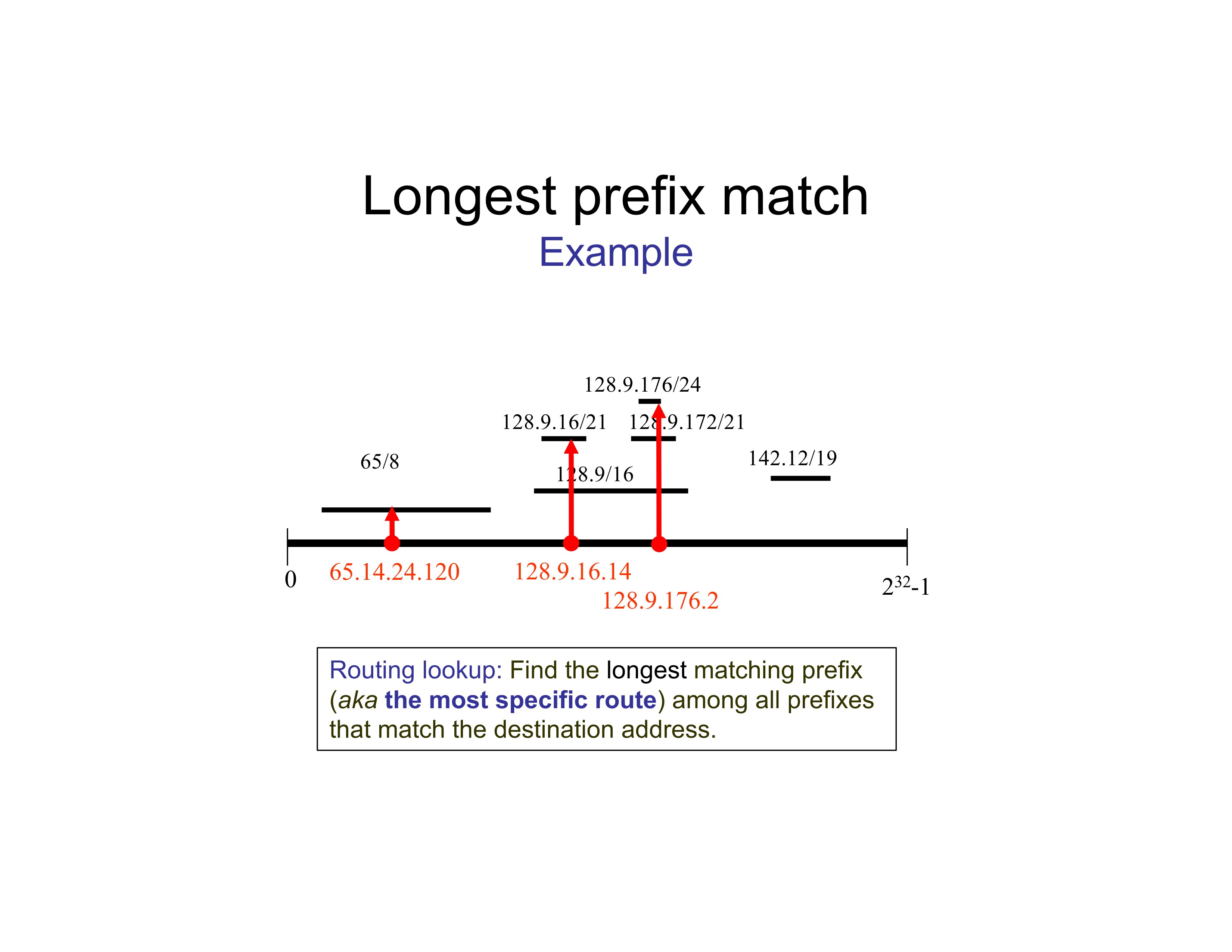
- Looking up in the routing tables looks for the longest prefix match
If (the packet is for this router’s Ethernet address) {
        Check the IP version number and length of datagram;
        Decrement TTL, and update IP header checksum;
           If (TTL == 0)  drop;
           If (IP destination address is in the forwarding table) {
                Forward to the correct port;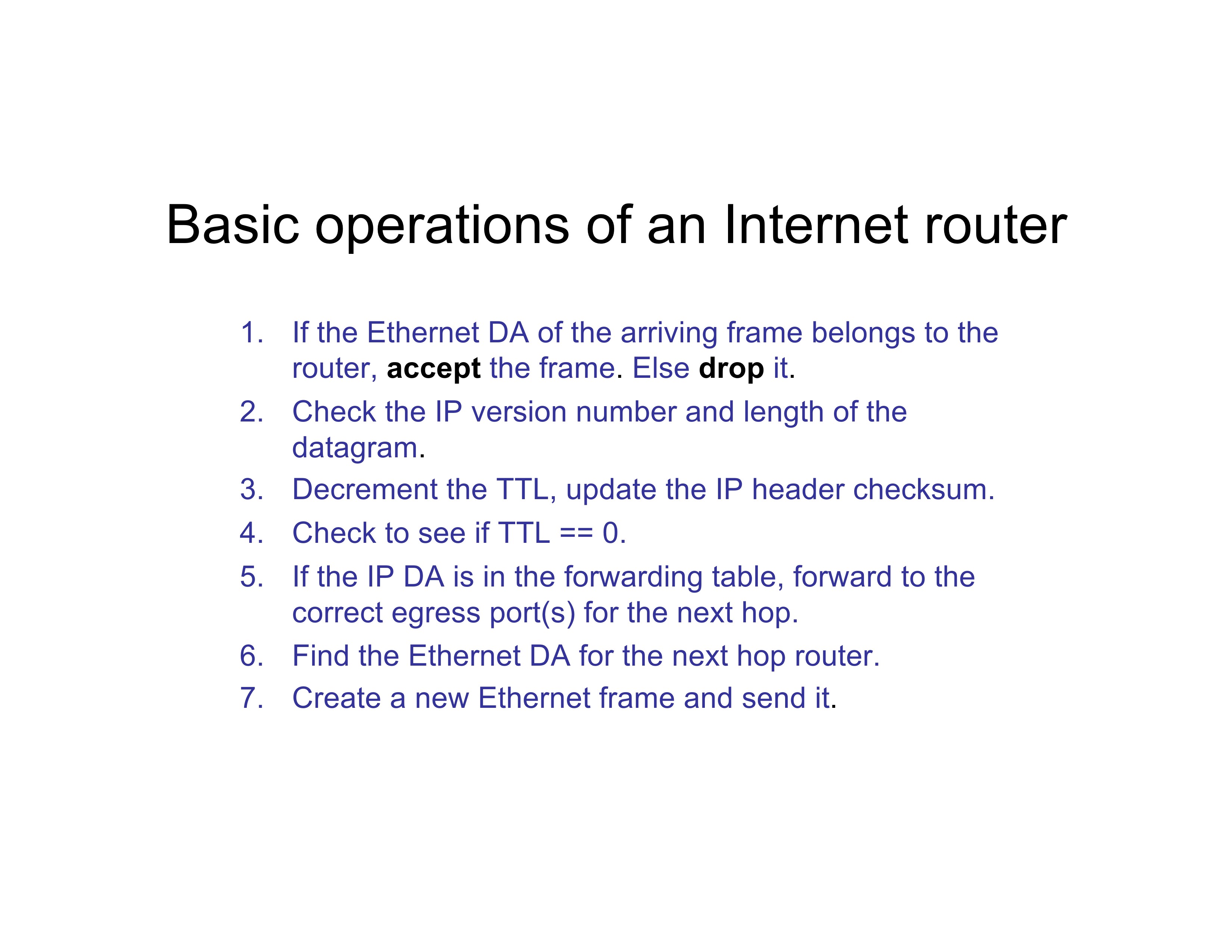
Routing tables
How to construct routing tables?
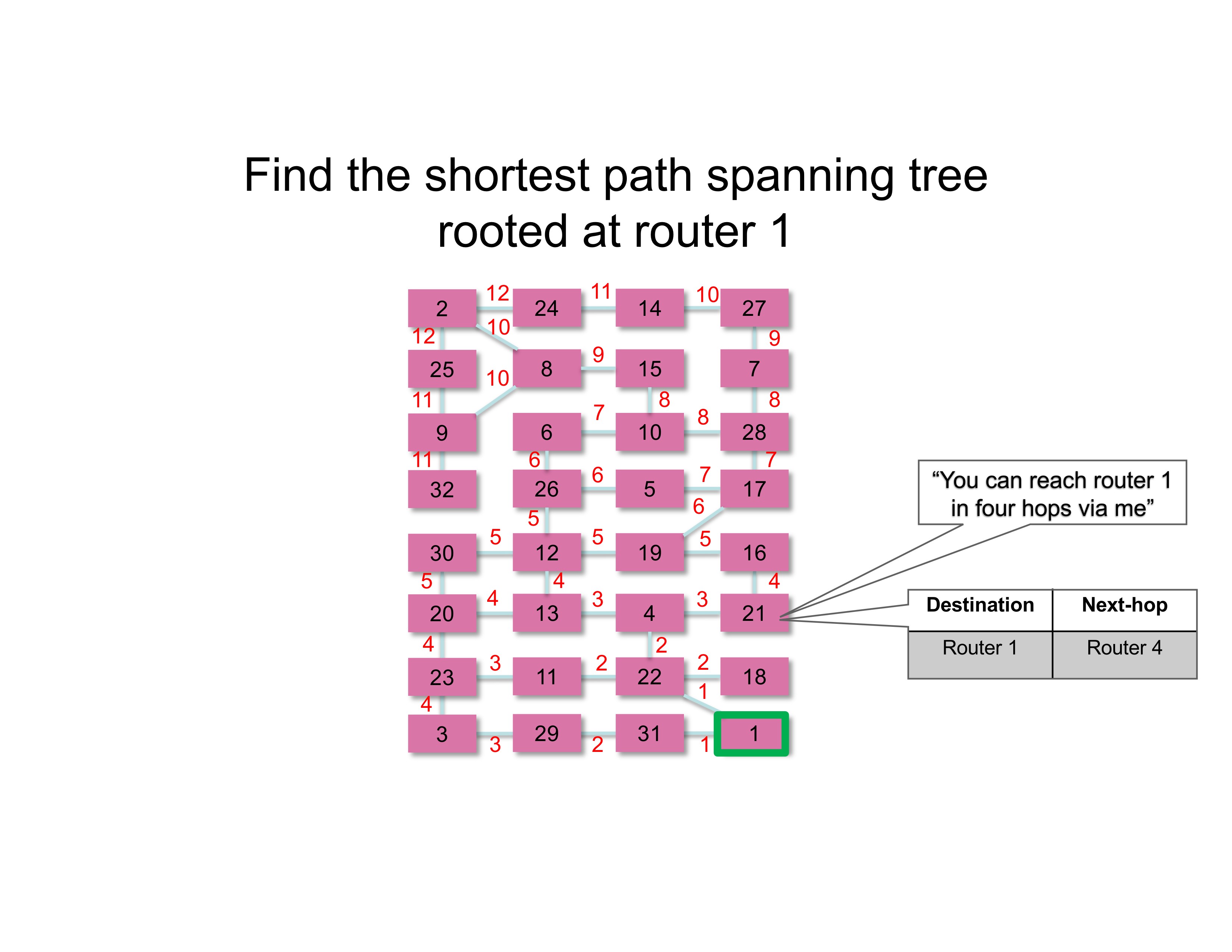
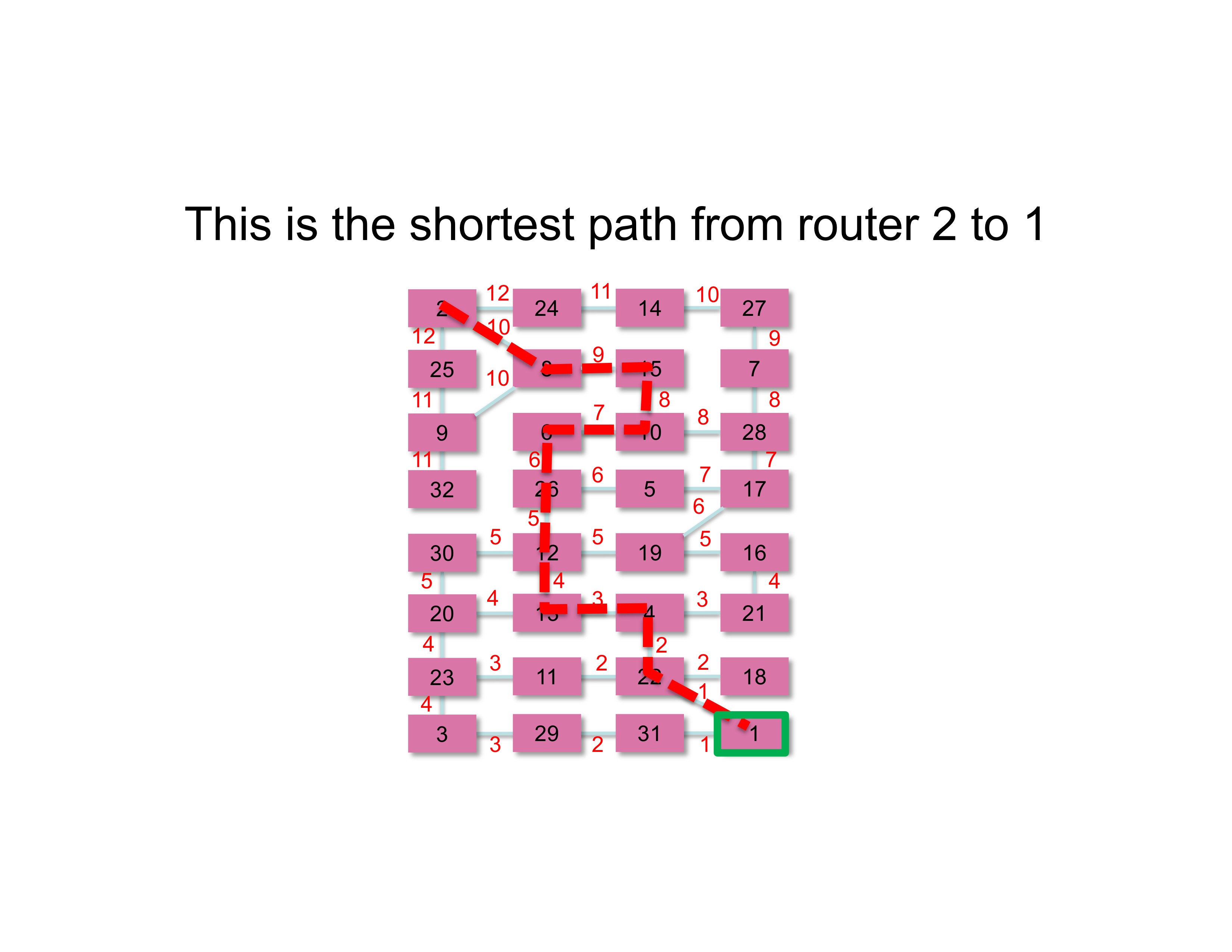
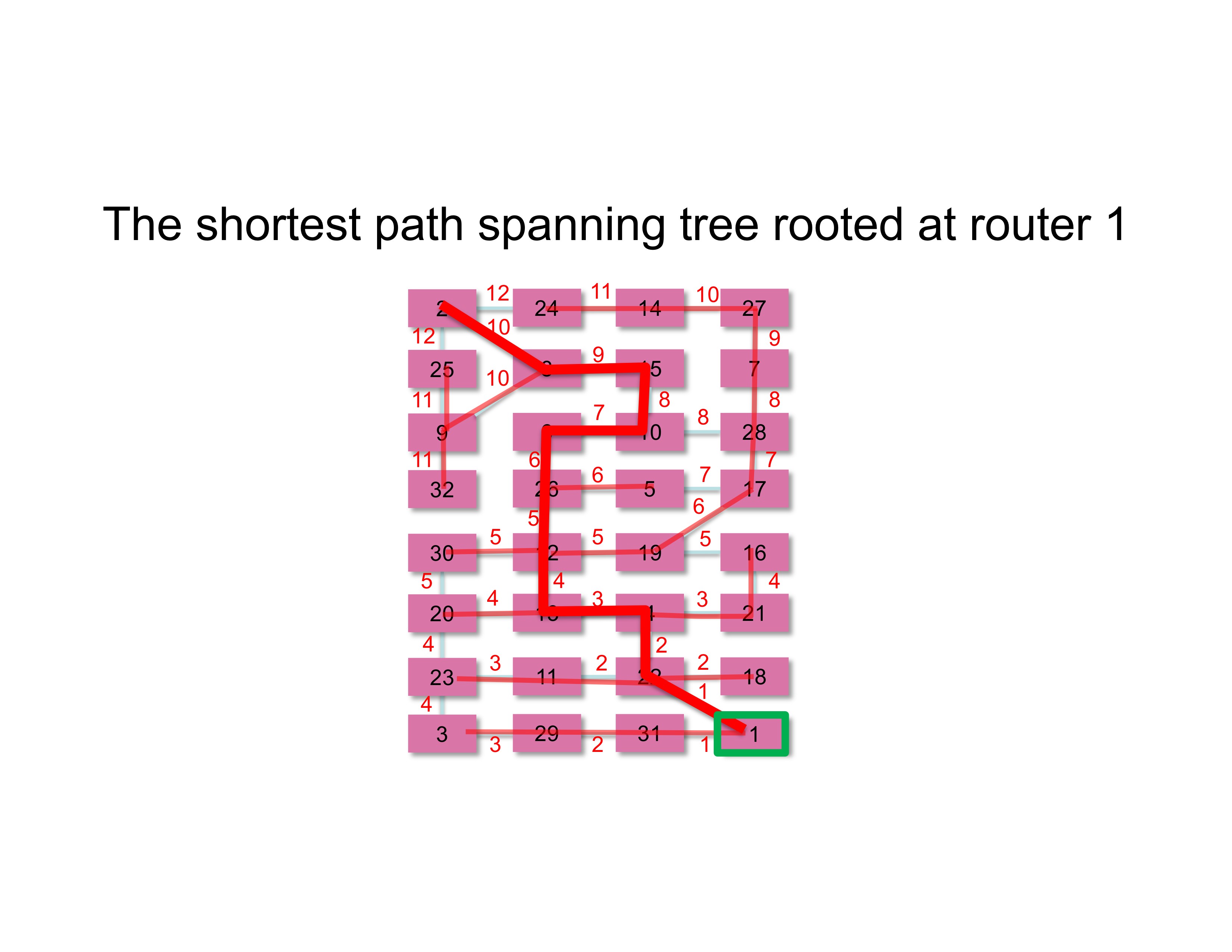
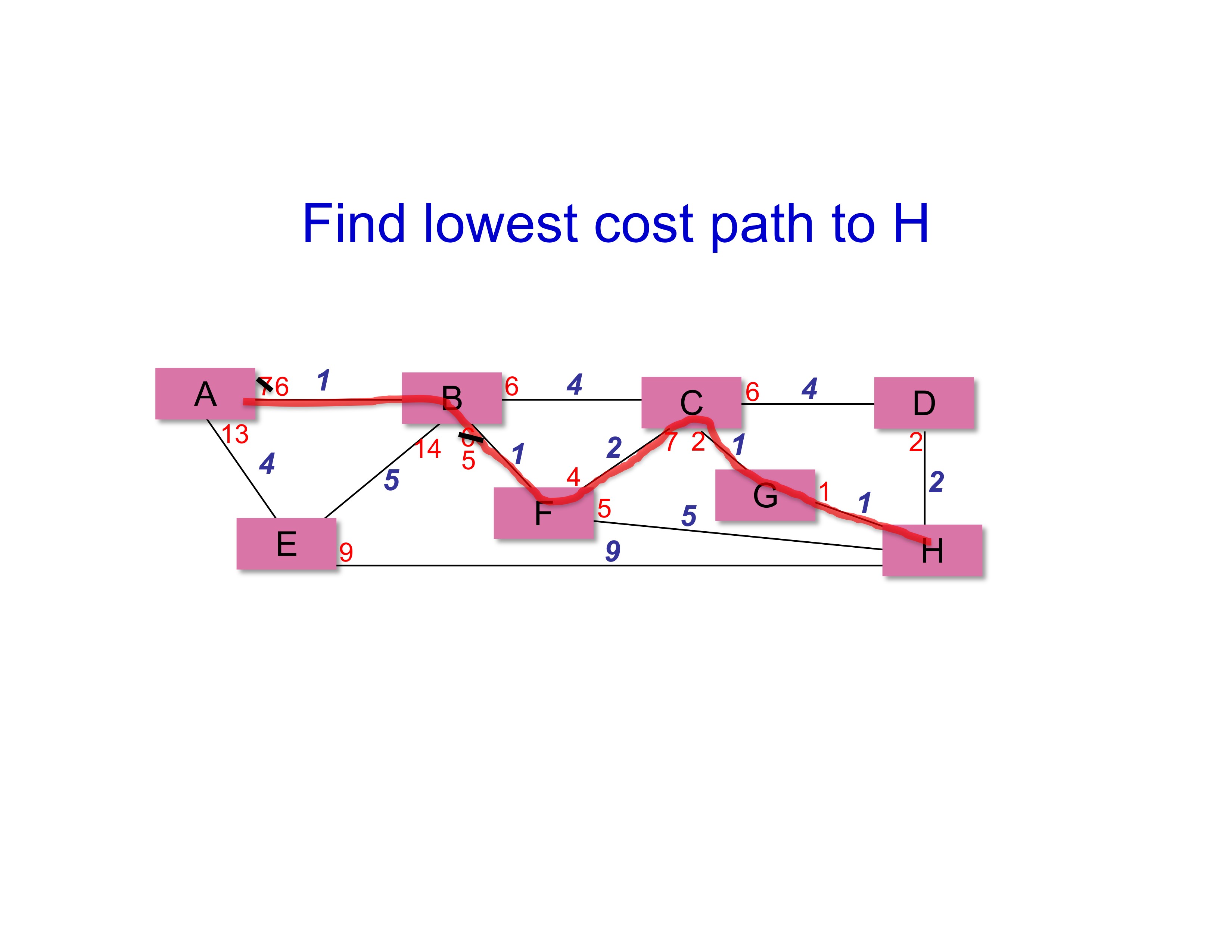
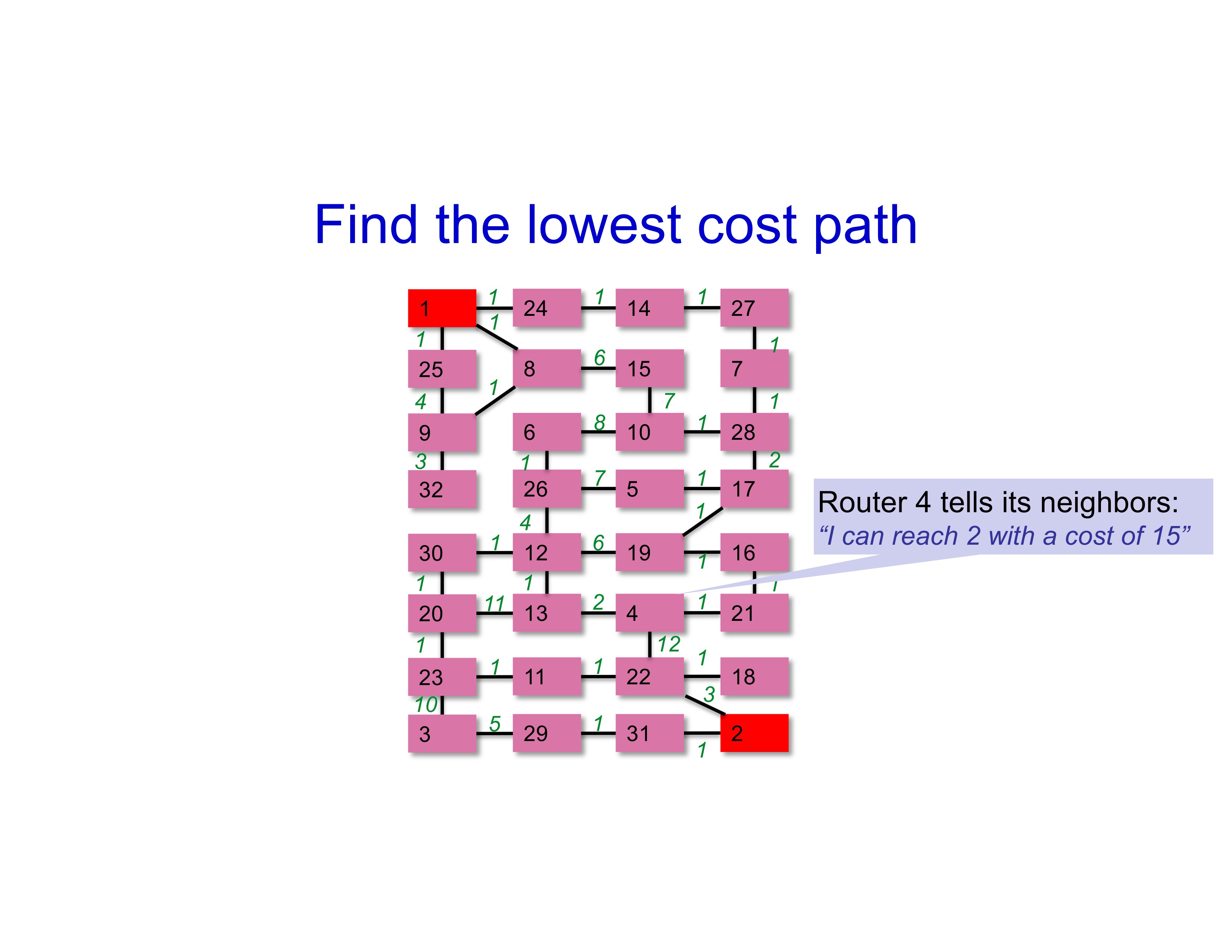
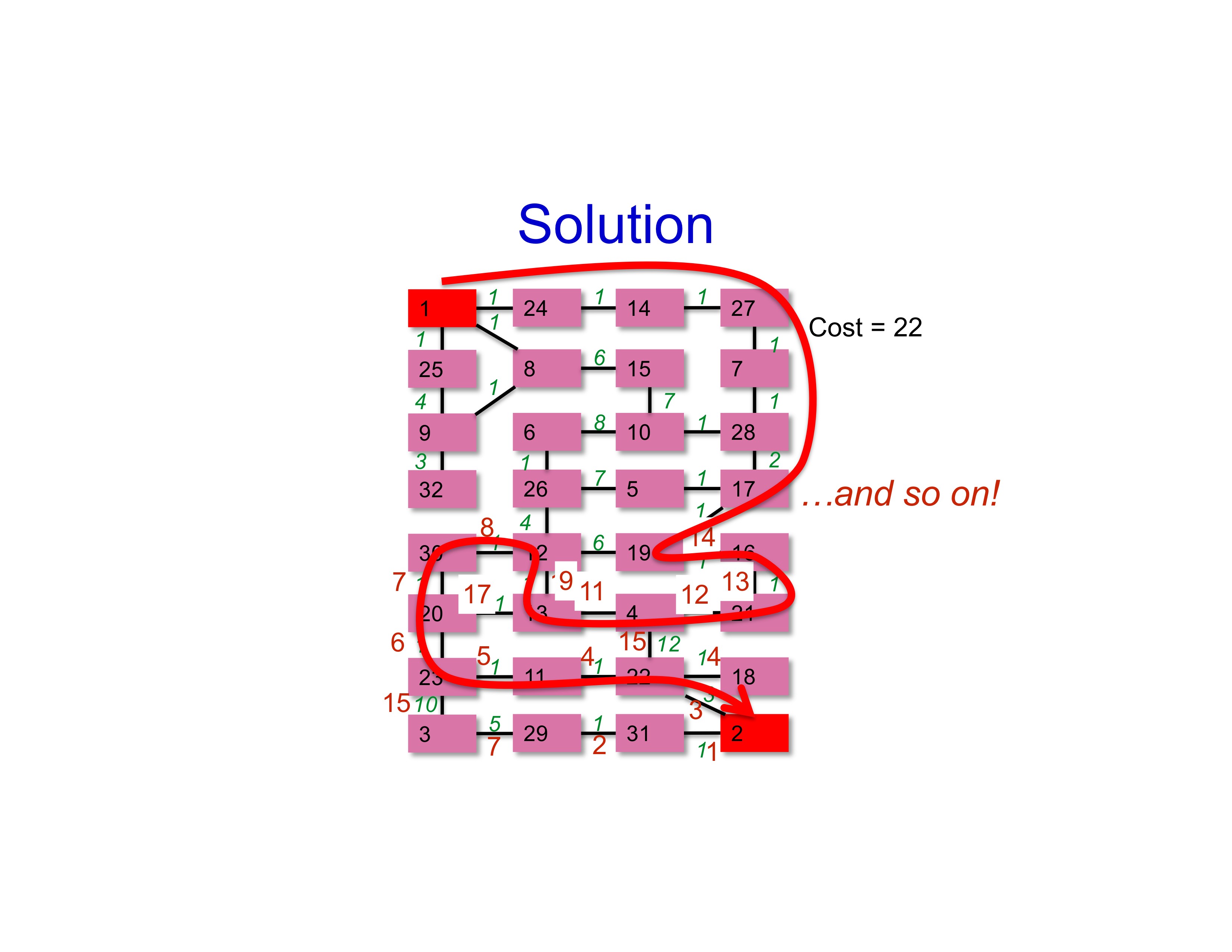
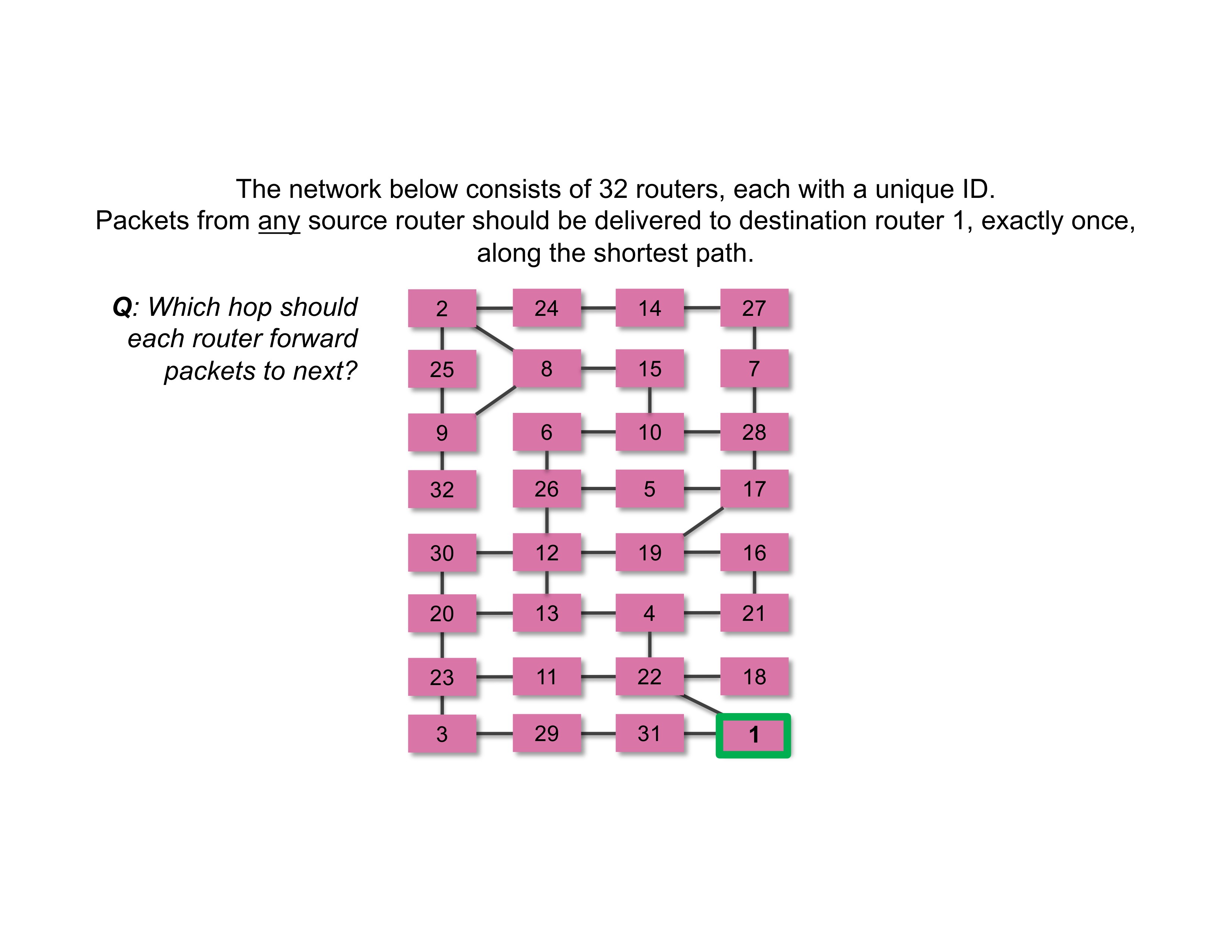
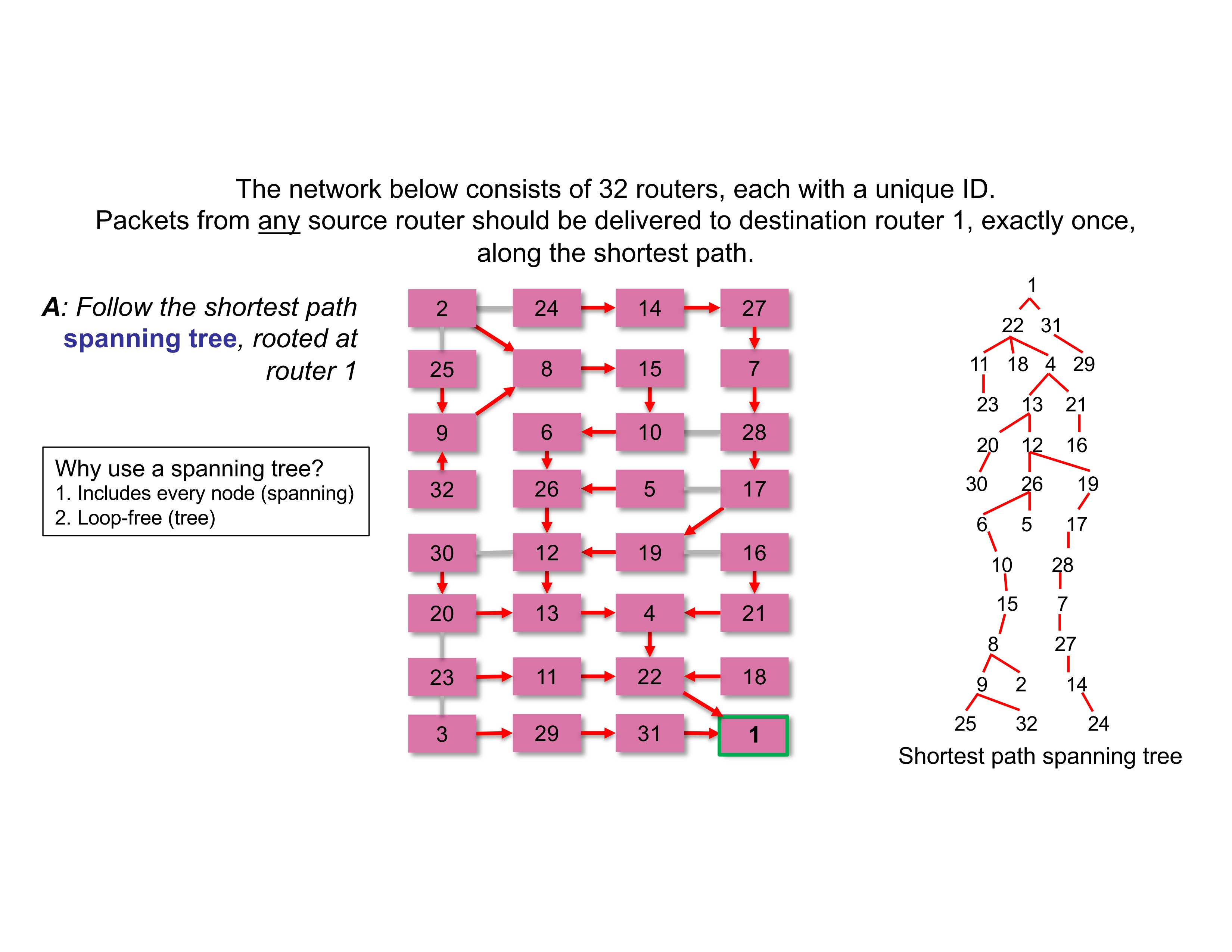
- If packets from any source router should be delivered to router X exactly once along the shortest path, the routing table for destination router X, is a spanning tree with root at router X.
- Routers build a spanning tree for each destination.
Bellman-Ford algorithm
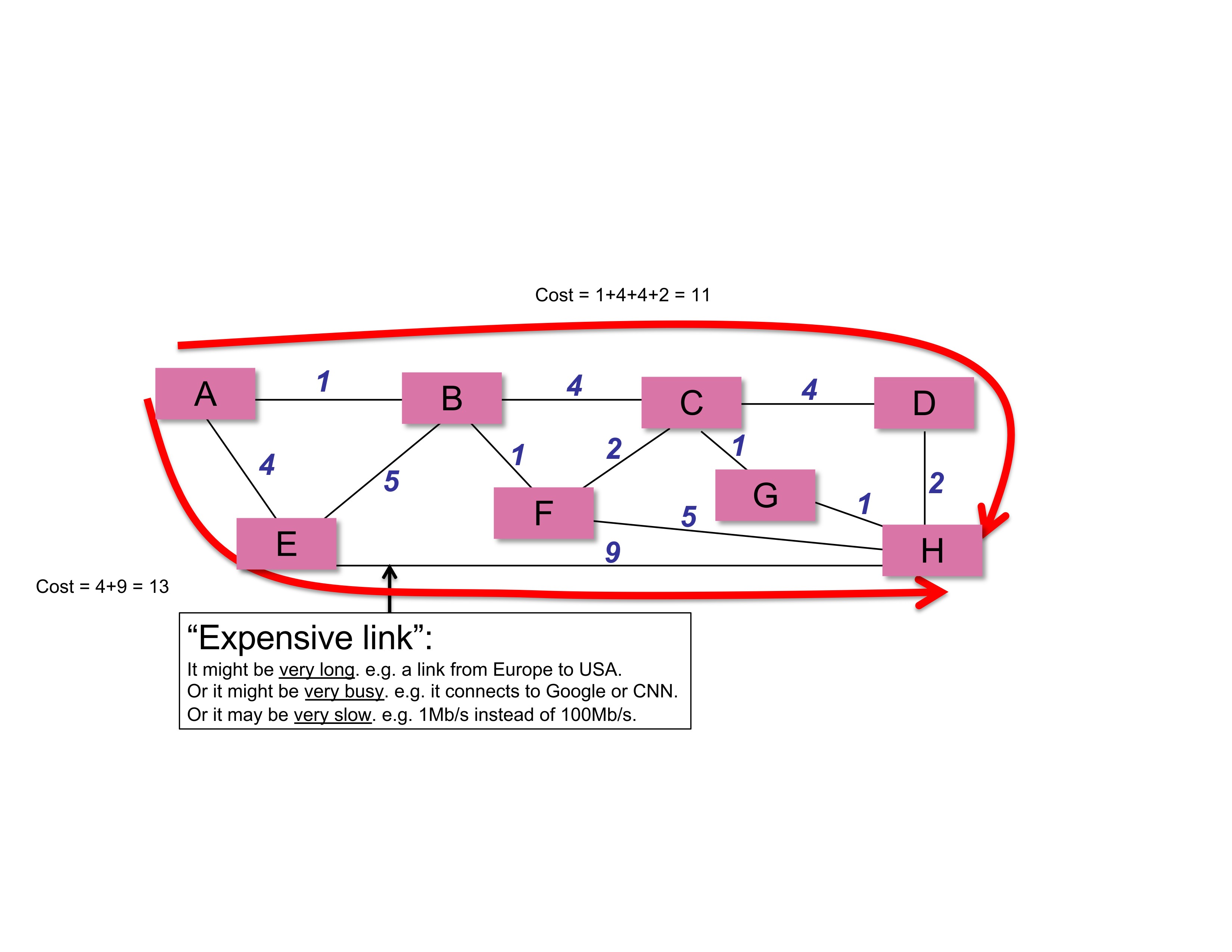
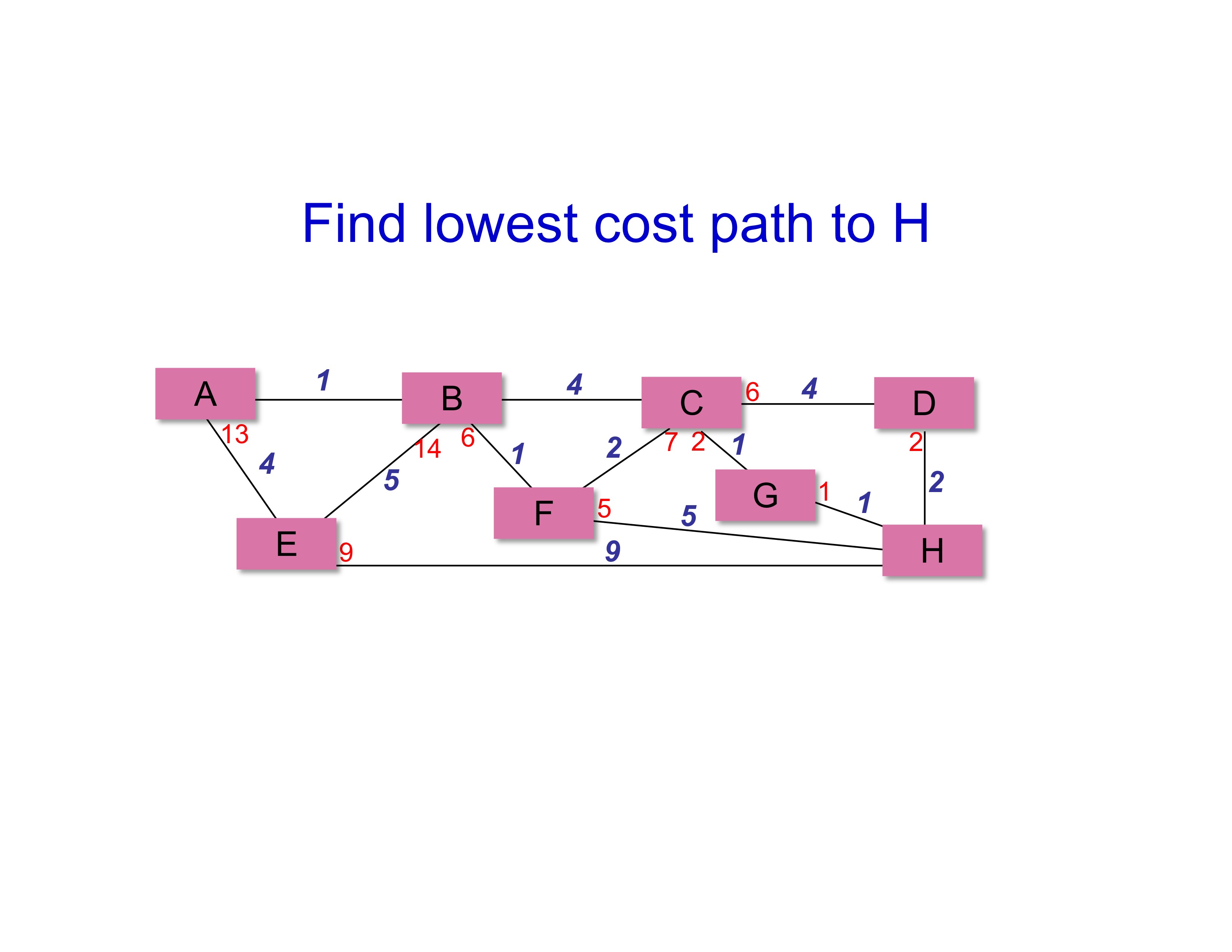
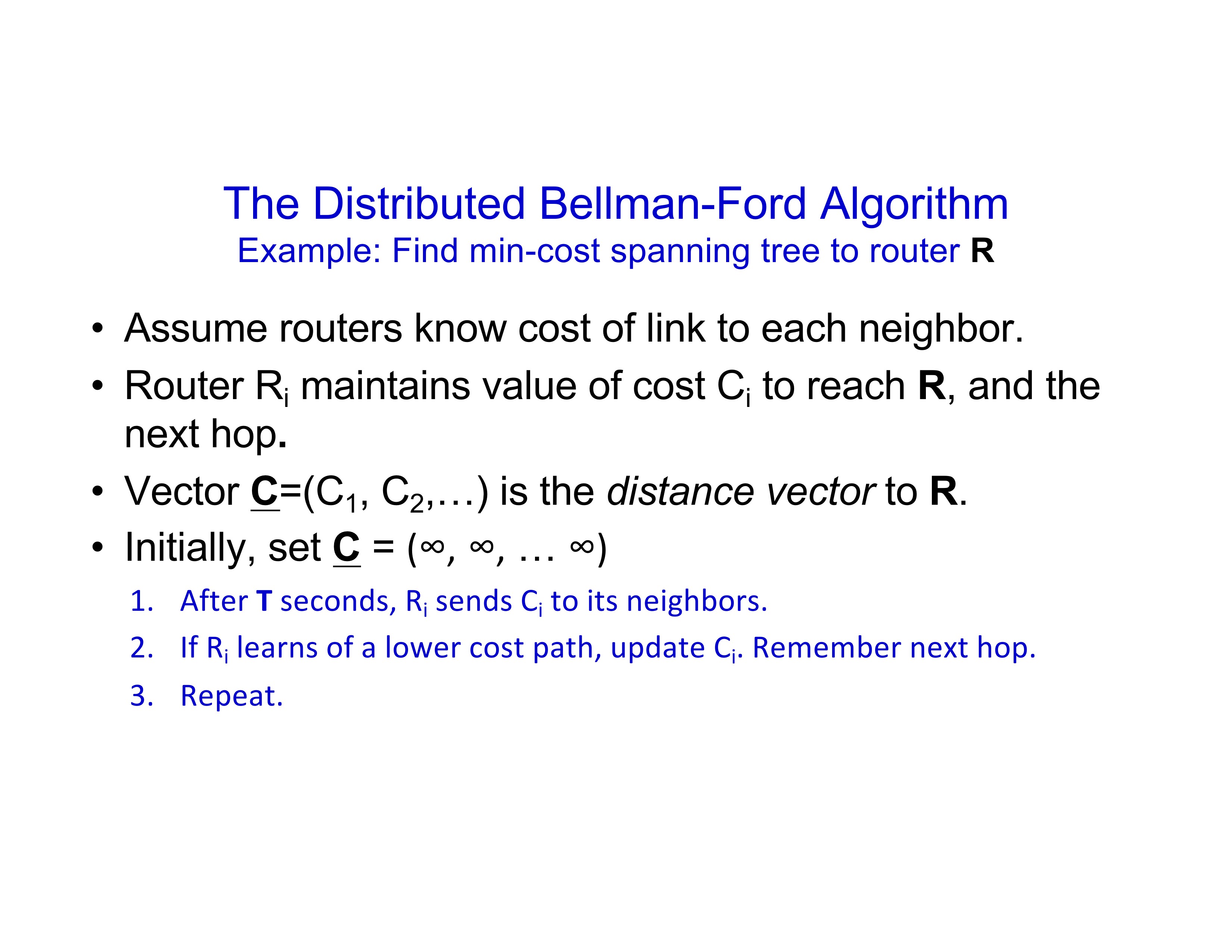
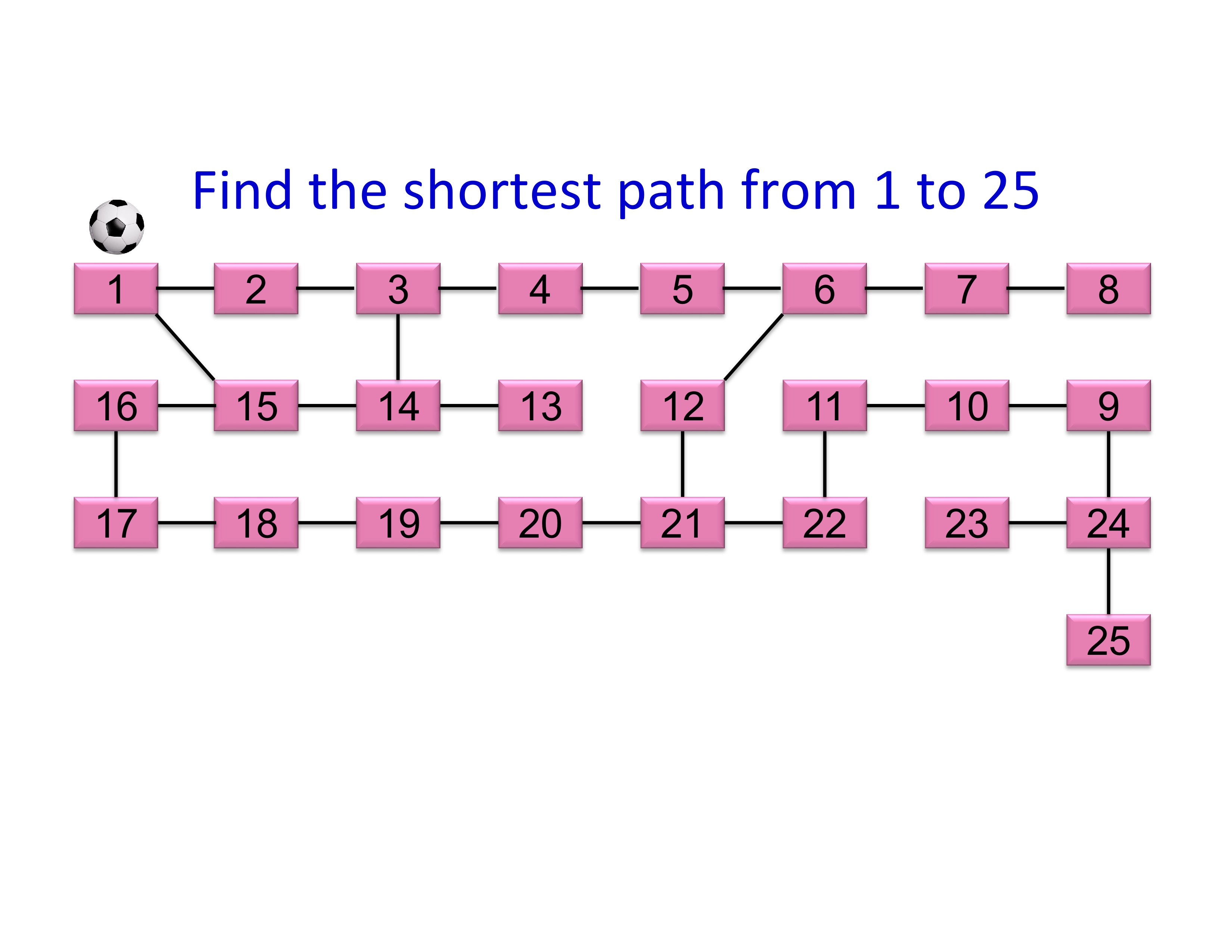
Bellman-Ford algorithm: every router advising its # hops from the destination, and update that number when they received a smaller # hops (new number + 1 < old number) from its neighbors, and breaks ties at random.