
手搓 Transformer(五):Encoder组装
前言
在前几篇文章中,我们已经分别实现了 Transformer 的核心组件,Embedding,Multi-Head Attention,LayerNorm,但这些只是零件。通过本篇文章,我们将把这些零件真正组装成Encoder,也就是论文 Attention Is All You Need 中的这一部分
本部分我们需要先实现PositionwiseFFN,这是一个非线性层,用以增强模型表达能力;然后再把Multi-Head Attention、LayerNorm、FFN组装为EncoderLayer;最后通过堆叠EncoderLayer,实现Encoder。具体的输入输出形状参数等分析,会在对应的类实现下具体讲解。
Encoder整体数据流
在写代码之前,我们先把整体的数据流搞清楚。
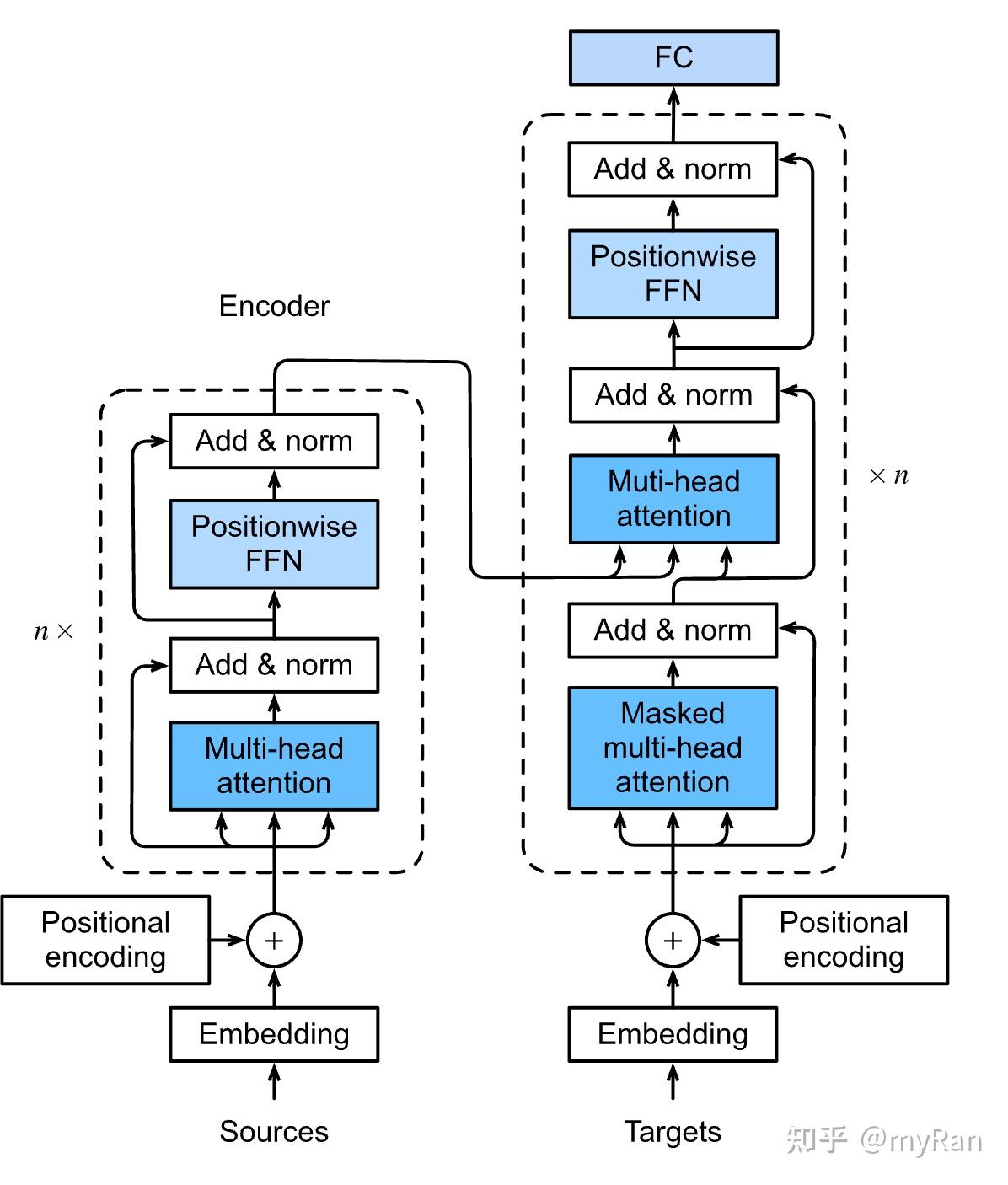
Transformer架构
输入输出
输入是tokens id,形状是(B, L)。输出是编码后的表示,形状是(B,L,D)。
Encoder 的完整流程
EncoderLayer 内部结构
每一层都包含多头自注意力和前馈网络层两大模块:
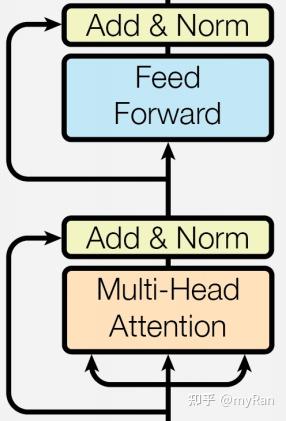
EncoderLayer结构
- Self-Attention:建模token之间关系
- FFN:逐token非线性变换
- Residual + LayerNorm:稳定训练
Positionwise FFN
先展示代码:
# 1. PositionwiseFFN
class PositionwiseFFN(nn.Module):
    """
    Input: (B, L, D)
    Output: (B, L, D)
    """
    def __init__(self, d_model: int, hidden: int, dropout: float = 0.1):
        super().__init__()
        self.fc1 = nn.Linear(d_model, hidden)
        self.fc2 = nn.Linear(hidden, d_model)
        self.dropout = nn.Dropout(dropout)

    def forward(self, x: torch.Tensor) -> torch.Tensor:
        # x : (B, L, D)
        x = self.fc1(x)
        x = F.relu(x)
        x = self.dropout(x)
        x = self.fc2(x)
return x该模块的参数设置有d_model,hidden,dropout.输入输出的张量结构均为(B,L,D).
作用
FFN对每一个 token 独立进行非线性变换,不做 token 之间交互。token之间的关系建模是在前面的Attention模块完成的。该模块是是逐位置(position-wise)的 MLP.
结构
PositionwiseFFN是两层线性层,中间使用Relu作为非线性激活函数.
为什么要升维再降维? FFN 在 embedding 维的变换是 d_model -> hidden -> d_model,也就是先进行升维,再降维。hidden 通常比 d_model 大,一般设置为 \(4 \times d_{model}\)。这样做是为了拓展特征空间,提升表达能力,并在中间引入非线性。
EncoderLayer
先展示代码:
# 2. EncoderLayer
class EncoderLayer(nn.Module):
    """
    Input: (B, L, D)
    OutPut: (B, L, D)
    """
    def __init__(self, d_model: int, n_head: int, hidden: int, dropout: float = 0.1):
        super().__init__()

        # 1. Multi-Head Attention
        self.multihead = MultiHeadAttention(d_model, n_head, dropout)
        self.norm1 = self.LayerNorm(d_model)
        self.dropout1 = nn.Dropout(dropout)

        # 2. FFN
        self.ffn = PositionwiseFFN(d_model, hidden, dropout)
        self.norm2 = LayerNorm(d_model)
        self.dropout2 = nn.Dropout(dropout)

    def forward(self, x: torch.Tensor, mask: torch.Tensor = None) -> torch.Tensor:
        # x : (B, L, D)
        # self-attention
        residual = x
        x = self.multihead(x, x, x, mask)
        x = self.dropout1(x)
        x = x + residual
        x = self.norm1(x)

        # ffn
        residual = x
        x = self.ffn(x)
        x = self.dropout2(x)
        x = x + residual
        x = self.norm2(x)

        return x
结构拆解
MHA和ffn都是用到了dropout,防止过拟合.二者结构分别为
使用残差连接,防止深层网络退化,使得梯度更稳定,更容易训练.这部分代码的书写,就是按照Transformer架构图,将之前的模块进行组装.注意,原论文中使用的是Post-Norm.
Encoder 组装
终于来到最顶层结构。先展示代码:
# 3. Encoder
class Encoder(nn.Module):
    """
    Input: (B, L)
    Output: (B, L, D)
    """
    def __init__(self, vocab_size: int, d_model: int, max_len: int, n_head: int, hidden: int, n_layer: int, dropout: float = 0.1):
        super().__init__()

        self.embedding = TransformerEmbedding(vocab_size, d_model, max_len, dropout)

        self.layers = nn.ModuleList(
            [EncoderLayer(d_model, n_head, hidden, dropout) for _ in range(n_layer)]
        )

    def forward(self, tokens: torch.Tensor, mask: torch.Tensor = None) -> torch.Tensor:
        x = self.embedding(tokens)
        for layer in layers:
            x = layer(x, mask)
return xEncoder的组装就是Embedding层加N层EncoderLayer层.该模块的参数设置是所有组件模块的参数集合.输入的张量形状是(B,L),也就是token id.输出的张量形状是(B,L,D).
测试代码
def main():
    encoder = Encoder(vocab_size=20, max_len=10, d_model=8, n_head=4, hidden=32, n_layer=6, dropout=0.1)
    x = torch.randint(0, 20, (10, 9)) # (B, L) token_id
    out = encoder(x)
    print(f"the shape of out is {out.shape}") #(B, L, D) = (10, 9, 8)
输出:
the shape of out is torch.Size([10, 9, 8])